Country's credit card base nears 20 million
E-commerce boom, more acceptance of plastic money driving growth; bankers say asset quality will not suffer this time
Nupur AnandSomasroy Chakraborty Mumbai/Kolkata India's credit card base is nearing the pre-crisis level as plastic money to gains acceptance in non-urban geographies also.
The outstanding number of credit cards was 19.95 million at the end of October 2014, the Reserve Bank of India (RBI)'s latest data showed. Bankers claimed the card base had probably topped 20 million in the last two months, for the first time since February 2010.
"I am sure that by the end of December, we would have crossed 20 million," Rajiv Anand, group executive and head of retail banking at Axis Bank, told Business Standard.
The exponential growth in India's e-commerce space has helped. The country's 213-million internet population, as on 2013, saw five million additions every month. Consumers are now buying almost everything online - groceries, apparel, furniture, jewellery - and on most occasions are using cards for payments.
Bankers appeared confident that this time the growth in credit card portfolios would not lead to deterioration in asset quality. "Unlike pre-2008, banks are continuously churning their portfolio and have been weeding inactive cards on a regular basis. Hence, we are not going to witness a repeat of the 2008-09 situation," Anand said.
Banks said they had turned cautious while acquiring card customers. These are mostly being offered to those who have a banking relationship with the lender concerned.
Vijay Jasuja, chief executive officer of SBI Cards (a joint venture between State Bank of India and GE Capital), said its card spends have increased significantly in recent years as new customers were acquired carefully. "Over the last few years, SBI Cards' strategy has been to acquire quality customers with high spending power. This is backed by attractive offers and schemes that provide greater value to customers on every purchase. Over the last three years, this has resulted in a substantial increase in our overall spends, that have been growing at an annual rate of around 40 per cent year-on-year," he said.
The entry of credit information companies has helped banks access comprehensive data of credit history of consumers.
"Credit information companies have played a key role in improving the portfolio quality," Kalpana Pandey, managing director and chief executive officer of CRIF High Mark Credit Information Services, said, "They enable credit card issuers to objectively evaluate risk of a potential client with various credit risk management products, including credit scores."
CRIF's study showed the average credit limits on credit cards had gone up in 2014 across the top 10 cities.
"The portfolio quality has also improved, with a reduction in the percentage of non-performing cards in 2014," Pandey said.

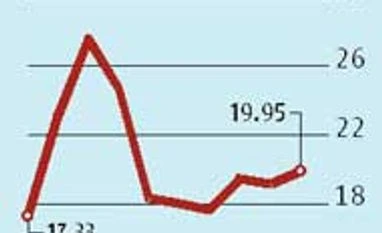 "Country's credit card base nears 20 million")


 Connect with us on WhatsApp