Govt may get RBI to monetise fiscal deficit in second half of FY21

A final decision on the matter will be taken before the borrowing calendar for October 2020-March 2021 is announced in late-September
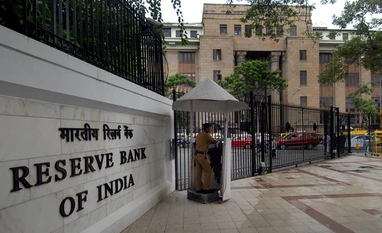
RBI
RBI
Arup Roychoudhury New Delhi
3 min read Last Updated : Jun 29 2020 | 6:59 AM IST
After sidestepping the idea for the first half (H1) of 2020-21 (FY21), the Centre is now considering direct monetisation of its fiscal deficit by the Reserve Bank of India (RBI) in the second half (H2), Business Standard has learnt.

“It is a high possibility,” said a top government official, when asked if the Centre was considering direct deficit monetisation. “In the latter half of the year, we will have a clearer picture of the economic damage the Covid-19 pandemic has unleashed, and may require further resources to provide support to the economy,” the official added.

A final decision will be taken before the borrowing calendar for October 2020-March 2021 is announced in late September. Officials say the borrowing plan for April-September has already been factored in by the markets, even after a hike in the programme.

In early May, the Centre had steeply revised its FY21 borrowing programme to Rs 12 trillion, from Rs 7.8 trillion estimated earlier. For the H1FY21, the Centre is slated to issue government securities (G-Secs) worth Rs 6.98 trillion, compared to the earlier plan of Rs 4.88 trillion.
Monetising the deficit is when the RBI directly purchases government bonds (G-Secs) from the primary market to help the Centre’s expenditure.

 In turn, the RBI prints more money to finance this debt. The practice of monetising deficit was in practice till 1997, when it was discontinued by then RBI governor C Rangarajan.


So far, the RBI has been ‘indirectly monetising’ by increasing the purchases of G-Secs in the secondary market through open-market operations (OMOs). The data available on the RBI’s website shows that, as of April 1-June 21, the RBI has purchased more than Rs 1.3 trillion in G-Secs through OMOs, compared with Rs 52,550 crore for the same period last year.

If a decision is taken to directly monetise deficit, it will also mean the Centre will borrow more than the Rs 12-trillion it has announced so far for FY21. However, sources indicate these could be in the form of specific targeted instruments, like ‘Covid bonds’.
This borrowing may be used specifically for purposes of providing support to the economy.

Recently, there has been a discussion in the Goods and Services Tax (GST) Council on the need to borrow more from markets to reimburse states for the compensation cess shortfall in the face of dwindling revenue. While the initial proposal was for the GST Council to borrow and distribute the amount among states, there is no precedence of a constitutional body borrowing from the bond markets.There is a precedent for the Centre to borrow and distribute that amount to states, which was also discussed in the GST Council.

Experts and analysts also agree that any unconventional means of raising resources, like deficit monetisation, will have to come with a clear intention on the government’s part to ensure the amount raised is targeted on what it should be used for, with very specific outcomes.

One subscription. Two world-class reads.

Already subscribed? Log in

Subscribe to read the full story →
*Subscribe to Business Standard digital and get complimentary access to The New York Times

Smart Quarterly

₹900

3 Months

₹300/Month

SAVE 25%

Smart Essential

₹2,700

1 Year

₹225/Month

SAVE 46%
*Complimentary New York Times access for the 2nd year will be given after 12 months

Super Saver

₹3,900

2 Years

₹162/Month

Subscribe

Renews automatically, cancel anytime

Here’s what’s included in our digital subscription plans

Exclusive premium stories online

  • Over 30 premium stories daily, handpicked by our editors

Complimentary Access to The New York Times

  • News, Games, Cooking, Audio, Wirecutter & The Athletic

Business Standard Epaper

  • Digital replica of our daily newspaper — with options to read, save, and share

Curated Newsletters

  • Insights on markets, finance, politics, tech, and more delivered to your inbox

Market Analysis & Investment Insights

  • In-depth market analysis & insights with access to The Smart Investor

Archives

  • Repository of articles and publications dating back to 1997

Ad-free Reading

  • Uninterrupted reading experience with no advertisements

Seamless Access Across All Devices

  • Access Business Standard across devices — mobile, tablet, or PC, via web or app

Topics :Fiscal DeficitReserve Bank of India RBIRBI on remonetisationModi governmentGovernment securities

Next Story



