After the second bi-monthly monetary policy committee meeting, the Reserve Bank of India Governor, Shaktikanta Das, Deputy Governors Michael Patra, MK Jain, and T Rabi Sankar took questions from the media on a wide range of issues. Edited excerpts:
RBI appears to be focused on 10-year bonds, whereas longer-dated bond yields have spiked. So, what will be the RBI’s strategy in subsequent government securities acquisition programmes (G-SAPs) in this regard?
Das: We are focused on the entire yield curve. If you see the GSAP auctions that we have done, we have included bonds across varied maturity profiles. The bond yield curve looks steep because when there is abundant liquidity, at the short end the rates fall much more than for the 10-year or 14-year ones. An yield of 6 per cent is not sacrosanct. We have talked about an orderly evolution of the yield curve. It is essential to draw conclusions from our forward guidance, communication, and actions.
The inflation rate gives the policy an elbow room. What kind of elbow room do you foresee?
Das: The inflation print of 4.3 per cent (for April) gives us space for our liquidity operations and enables us to step up liquidity infusion into the system.
How is the RBI looking at the forward premium market?
Patra: Forward premiums are essentially a market outcome. The last time when the forwards spiked, it was because of a foreign investment in an invIT. We watch these outcomes and stand ready to take countervailing actions to cool the forwards, or the opposite, as and when necessary.
Because of the kind of forex reserve that the RBI is holding, there have been conjectures on how it has played out in your balance sheet and how the dividend payment worked out...
Das: Our forex operations are mainly driven by the consideration of maintaining the stability of the exchange rate, which, I think, we have been quite successful in. Emerging market economies have to build their own buffers and the RBI is no exception. The surplus transfer is not a policy issue, it’s more of an accounting issue.
Rabi Sankar: The increase in the surplus transfer is largely due to the lower risk capital provisioning this year as compared to the last, and that in turn is because the balance sheet increase in 2019-20 was Rs 12.37 trillion. So, the increased provision for risk correspondingly was much higher. In 2020-21, the increase in the balance sheet size was about Rs 3.6 trillion, nearly one-fourth of the increase in the balance sheet in the previous year.
What is the growth-inflation trade-off that the MPC will want to shift its stance to?
Das: Our stance is to revive the economy and look for durable and sustained growth.
Patra: In several MPC statements, inflation analysis has been done and the view is that at this time inflation is not persistent. Inflation will turn persistent when it is backed by demand-pull. We will keep monitoring as and when demand pressures start feeding into the inflationary process.
Once demand starts picking up and if there is a likely pass-through to CPI inflation, will it force the MPC to start to exit the accommodative stance sooner?
Das: We are monitoring the situation. As and when things happen, it is for the MPC to take note. We are monitoring the revival of growth and inflation dynamics. Last year, we had a contraction of our economy by 7.3 per cent and this year we have made a downward revision of growth. So, at this point, the focus is on growth and giving forward guidance to the accommodative stance. Hence, the focus on growth will continue and inflation, according to MPC’s assessment, will be 5.1 per cent, which is well within the 2-6 per cent band.
How much utilisation have you seen of the relief measures you announced in early May?
Das: Wherever we are seeing evidence of stress, we are providing support. All banks have taken their respective board’s approval on such schemes. And, we have permitted banks to use their excess liquidity for such loans. As far as restructuring is concerned, we have not differentiated on the basis of sectors.
You have called for calibrated and timely measures by the Centre on the supply-side equation. Do you expect any action from the government? If not, what more can RBI do?
Das: On pulses, the government has taken some supply-side measures. The RBI and the government are holding discussions on other matters. On petrol and diesel prices, coordinated action by the states and the Centre is needed. But, they have their constraints with regard to financing their fiscal deficit. I am sure the government is keeping a watch on the inflation scenario.

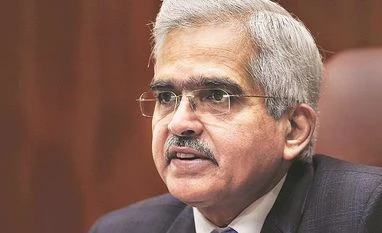 "Monetary policy: Inflation trend not persistent at this time, says RBI")












 Connect with us on WhatsApp