Monetary policy: RBI keeps rates unchanged, cuts growth forecast

Repo rate stays at 4%, stance accommodative; Central bank to buy Rs 1.2 trillion of bonds in Q2
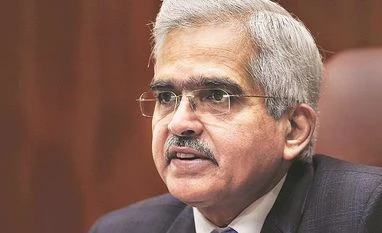
rbi governor, shaktikanta das
This is in line with the RBI’s April policy decision to move to a state-based, rather than time-based, forward guidance, given the Covid-related uncertainties
Anup Roy Mumbai
5 min read Last Updated : Jun 05 2021 | 1:11 AM IST
The Reserve Bank of India (RBI) on Friday kept its policy rates unchanged, scaled down the growth projections for the current financial year by a full percentage point, and said it would buy Rs 1.2 trillion of government securities under its own version of quantitative easing for the second quarter.

The six-member monetary policy committee (MPC) decided unanimously to keep the repo rate unchanged at 4 per cent. The stance remains “accommodative” for “as long as necessary to revive and sustain growth on a durable basis and continue to mitigate the impact of COVID-19 on the economy, while ensuring that inflation remains within the target going forward”.

This is in line with the RBI’s April policy decision to move to a state-based, rather than time-based, forward guidance, given the Covid-related uncertainties.


“The MPC was of the view that at this juncture, policy support from all sides is required to regain the momentum of growth that was evident in the second half of 2020-21 and to nurture the recovery after it has taken root,” RBI Governor Shaktikanta Das said in an online address.

Das made it clear that the central bank’s focus was on reviving growth.

“We are monitoring the revival of growth, inflation dynamics,” Das said in a post-policy interaction with the media.

“Last year we had a contraction of our economy by 7.3 per cent and this year we have made a downward revision of growth so at this point of time the focus is on growth and (giving) a forward guidance with regard to accommodative stance. Hence, the focus on growth will continue and inflation, according to the MPC’s assessment, will be 5.1 per cent, which is well within the band of 2-6 per cent,” Das said.
As expected by many analysts, the central bank lowered the gross domestic product (GDP) projection, while slightly increasing the inflation forecast.

Real GDP growth is now expected at 9.5 per cent in 2021-22 -- 18.5 per cent in Q1, 7.9 per cent in Q2, 7.2 per cent in Q3, and 6.6 per cent in Q4.

The RBI in the April policy had kept its 10.5 per cent growth projection unchanged.

The central bank expects consumer price index-based inflation at 5.1 per cent for the fiscal year -- 5.2 per cent in Q1, 5.4 per cent in Q2, 4.7 per cent in Q3, and 5.3 per cent in Q4, “with risks broadly balanced”.

In the April policy, the RBI had guided inflation would be 4.4 per cent in Q3 and 5.1 per cent in Q4.


The larger than expected government securities acquisition programme (G-SAP) made the local bond investors happy. The central bank said it would buy Rs 1.2 trillion of bonds from the market in the second quarter.

For the first quarter, it has Rs 40,000 crore left from the Rs 1-trillion programme. However, Rs 10,000 crore of this will be used to buy state development loans (SDLs), or bonds issued by states.

And by all indications, the G-SAP for the next quarter will include SDLs, which pushed up the local bond yields a little bit.

The 10-year bond yield closed at 6.027 per cent from its previous level of 5.99 per cent. The rupee closed at 72.99 a dollar from its previous close of 72.92.


India’s foreign exchange reserves, which may have touched $600 billion by this week, give stability to the economy against external shocks, said the governor. The buffer helps the local currency to remain stable.

The RBI’s reserves have risen by over $135 billion since early 2020 -- among the highest increases in the region, said DBS Economist Radhika Rao.

“More importantly, we also sense a likely elevation in reserves accretion as a priority for the central bank, not merely conjoined with the FX/market movements. This is likely a move to strengthen the country’s defences just as the US Fed is expected to withdraw extraordinary stimulus in the second half of 2021,” Rao said.


The central bank is not fixated on a 6 per cent level for the 10-year bond, Das said in an interaction with the media. The RBI’s intention continues to remain an “orderly evolution of the yield curve”, he said.

In its policy, the central bank also announced a Rs 15,000-crore package for contact-intensive sectors such as hotels and restaurants, tourism, and a whole gamut of services, including for beauty parlours. This is essentially the same kind of facility extended for the health sector in the April policy.

The RBI also proposed to expand the Covid resolution framework for loans up to Rs 50 crore from Rs 25 crore announced in the April policy. The measures will aid micro, small, and medium enterprises (MSME). It will also be augmented by a Rs 16,000-crore liquidity window for Small Industries Development Bank of India (SIDBI), which will lend to SMEs.


“The coordinated and active efforts of the RBI and government will support growth on a more durable basis during these difficult times,” said State Bank of India Chairman Dinesh Khara.  

Zarin Daruwala, chief of Standard Chartered Bank in India, said: “The RBI’s reiteration of its accommodative stance till economic growth recovers, should help ease financial conditions and cap interest rates.”

The RBI governor also made it abundantly clear that the central bank was not in favour of cryptocurrencies.


One subscription. Two world-class reads.

Already subscribed? Log in

Subscribe to read the full story →
*Subscribe to Business Standard digital and get complimentary access to The New York Times

Smart Quarterly

₹900

3 Months

₹300/Month

SAVE 25%

Smart Essential

₹2,700

1 Year

₹225/Month

SAVE 46%
*Complimentary New York Times access for the 2nd year will be given after 12 months

Super Saver

₹3,900

2 Years

₹162/Month

Subscribe

Renews automatically, cancel anytime

Here’s what’s included in our digital subscription plans

Exclusive premium stories online

  • Over 30 premium stories daily, handpicked by our editors

Complimentary Access to The New York Times

  • News, Games, Cooking, Audio, Wirecutter & The Athletic

Business Standard Epaper

  • Digital replica of our daily newspaper — with options to read, save, and share

Curated Newsletters

  • Insights on markets, finance, politics, tech, and more delivered to your inbox

Market Analysis & Investment Insights

  • In-depth market analysis & insights with access to The Smart Investor

Archives

  • Repository of articles and publications dating back to 1997

Ad-free Reading

  • Uninterrupted reading experience with no advertisements

Seamless Access Across All Devices

  • Access Business Standard across devices — mobile, tablet, or PC, via web or app

Topics :Reserve Bank of IndiaCoronavirusInflationmonetary policymonetary policy committeeIndian Economyrepo rateretail inflationShaktikanta DasRBI monetary policyGDP growthGDP forecastGross domestic productGovernment securitiesIndian BanksHealth sector

Next Story



