Punjab National Bank (PNB) is examining the concerns raised by a proxy advisory firm regarding the sale of stake in PNB Housing Finance to a clutch of investors led by Carlyle Group, and is expected to address these issues at the shareholders meeting scheduled for next month, said a government official.
Governance watchdog Stakeholders Empowerment Services (SES), in a report, said the mortgage lender’s decision to preferentially allot Rs 3,200 crore worth of shares and Rs 800 crore worth of warrants to Carlyle, former HDFC Bank chief executive officer Aditya Puri’s family investment vehicle Salisbury Investments, General Atlantic, and Alpha Investments at Rs 390 a piece was “unfair” to public shareholders of the company and shareholders of PNB.
However, the government — the majority shareholder in PNB — has not found any regulatory issues in the transaction as of now, and an explanation would be sought from the lender if required, the official quoted above said. SES had also questioned preferential allotment of shares to the new investors that led to PNB ceding control of the company without getting any premium. It argued that a rights issue would have been a “fair and better option”.
PNB had earlier deliberated on a rights issue, but the proposition turned out to be difficult from a regulatory clearance point of view, said a PNB official. The earlier thinking was to go for a QIP, and to have the bank participate through rights issue, the official added. However, this proved difficult as PNB would have still held more than 30 per cent in the housing finance company, breaching the regulatory norm.
However, Institutional Investor Advisory Services (IiAS) said “there is nothing wrong in the structuring of the transaction”.
This could split investor votes at the e-voting, which will remain open between June 18 and 21, while the extraordinary general meeting (EGM) to decide the fate of the transaction will take place on June 22. Shares of PNB Housing closed at Rs 858 on Tuesday, down 2.7 per cent. The stock has risen 95 per cent since the announcement of the deal.
Amit Tandon, founder and managing director of IiAS, believes the argument around pricing is triggered only due to the sharp movement in the stock price.
“The stock price of PNB Housing Finance has run up fiercely. As a result, people are saying the offer price is disproportionately low. However, the underlying cause of the stock price jump is that Aditya Puri is investing. If anybody else would have invested the stock price wouldn’t have gone up so much,” he said.
Tandon, however, said the pricing of the warrants can be “more realistic.”
The transaction will trigger an open offer as Carlyle will replace state-owned PNB as the controlling shareholder of PNB Housing.
The open offer to acquire 26 per cent shares from the public will be made at Rs 403 per share.
“The open offer is a mere formality given the present market price. It is highly unlikely that any shareholder would tender their shares,” SES said.
Tandon said this can be said only with the benefit of hindsight.
“The rights issue would have been done at market price. You cannot be sure if the stock price would have rallied so much,” he said.

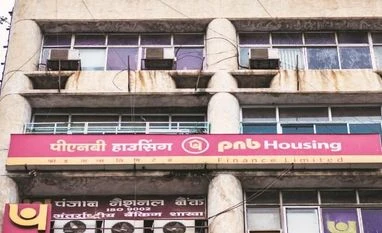 "PNB examining proxy advisor's concern on deal with Carlyle Group")












 Connect with us on WhatsApp