RBI cracks whip on banks not game for asset recast

Central bank modifies NPA resolution norms; to penalise banks for delays
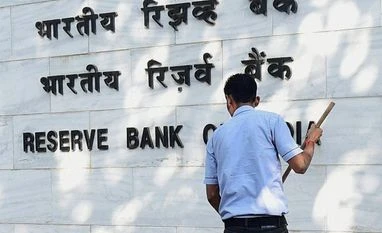
Reserve Bank of India
Anup Roy Mumbai
Last Updated : May 06 2017 | 1:58 AM IST

Don't want to miss the best from Business Standard?

On a day when the government vested more powers in the Reserve Bank of India (RBI) in the war against bad debt, the central bank imposed a corrective action plan (CAP) on a wide range of restructurings exercised by banks.

Such a CAP was till now applicable for only the Joint Lenders’ Forum (JLF) mechanism. It is enforced to preserve the economic value of stressed assets. A specified timeline is framed by banks, with disincentives in the form of asset classification and accelerated provisioning where lenders fail to adhere to the JLF Framework. 

Now, the CAP will be applicable for such schemes as a flexible structuring of project loans, change in ownership under Strategic Debt Restructuring and the Scheme for Sustainable Structuring of Stressed Assets (‘S4A’), etc.

“In this context, it is reiterated that lenders must scrupulously adhere to the timelines prescribed in the framework for finalising and implementing the CAP. To facilitate timely decision making, it has been decided that, henceforth, the decisions agreed upon by a minimum of 60 per cent of creditors by value and 50 per cent of creditors by number in the JLF would be considered as the basis for deciding the CAP, and will be binding on all lenders,” went the RBI notification on its website.

“Lenders shall ensure that their representatives in the JLF are equipped with appropriate mandates, and that decisions taken at the JLF are implemented by the lenders within the timelines.”

Also, the central bank put strict criteria for all participating banks in the process. “The stand of participating banks while voting on the final proposal before the JLF shall be unambiguous and unconditional,” RBI directed. “Any bank which does not support the majority decision on the CAP may exit, subject to substitution within the stipulated time line, failing which it shall abide by the decision of the JLF.”

Banks should implement the JLF decision without any additional conditionalities. And, bank boards “shall empower their executives to implement the JLF decision without requiring further approval from the board”.

Any non-adherence to the instructions and timelines specified under JLF will attract monetary penalties, RBI cautioned. 

Earlier in the day, ICICI Bank's managing director, Chanda Kochhar, had complained that not all banks in a JLF adhered to decisions taken by consensus, and that they don’t stick to timelines on a resolution process, derailing the latter.

One subscription. Two world-class reads.

Already subscribed? Log in

Subscribe to read the full story →
*Subscribe to Business Standard digital and get complimentary access to The New York Times

Smart Quarterly

₹900

3 Months

₹300/Month

SAVE 25%

Smart Essential

₹2,700

1 Year

₹225/Month

SAVE 46%
*Complimentary New York Times access for the 2nd year will be given after 12 months

Super Saver

₹3,900

2 Years

₹162/Month

Subscribe

Renews automatically, cancel anytime

Here’s what’s included in our digital subscription plans

Exclusive premium stories online

  • Over 30 premium stories daily, handpicked by our editors

Complimentary Access to The New York Times

  • News, Games, Cooking, Audio, Wirecutter & The Athletic

Business Standard Epaper

  • Digital replica of our daily newspaper — with options to read, save, and share

Curated Newsletters

  • Insights on markets, finance, politics, tech, and more delivered to your inbox

Market Analysis & Investment Insights

  • In-depth market analysis & insights with access to The Smart Investor

Archives

  • Repository of articles and publications dating back to 1997

Ad-free Reading

  • Uninterrupted reading experience with no advertisements

Seamless Access Across All Devices

  • Access Business Standard across devices — mobile, tablet, or PC, via web or app

Next Story



