RBI lifts interest cap on microfinance institutions, bans usurious rates

Borrower cannot be charged any amount not been explicitly mentioned in a factsheet, says regulator.
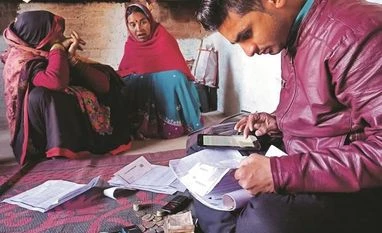
Microfinance
The RBI will continue checking the rates microfinance institutions charge.
BS Reporter Mumbai
2 min read Last Updated : Mar 14 2022 | 2:39 PM IST
The Reserve Bank of India (RBI) on Monday released its final guidelines for microfinance loans, lifting an interest cap and allowing companies to have a board-approved policy to price for such lending.

The RBI will continue checking that microfinance institutions do not charge usurious rates. The regulator said each entity has to disclose pricing related information to borrowers in a standardised simplified factsheet. A borrower cannot be charged any amount that has not been explicitly mentioned in the factsheet.

Also, it has revised the definition of microfinance loans as a collateral-free loan given to a household having annual household income up to Rs 300,000. Currently, a microfinance borrower is identified by annual household income not exceeding Rs 125,000 for rural and Rs 200,000 for urban and semi-urban areas.

“All collateral-free loans, irrespective of end use and mode of application/ processing/ disbursal (either through physical or digital channels), provided to low-income households, i.e., households having annual income up to Rs 3,00,000, shall be considered as microfinance loans,” said the RBI.

Regulated entities should have board approved policy which ensures that the outflows of a household on account of repayment of monthly loan obligations should not exceed 50 per cent of the income of the household. “The computation of loan repayment obligations shall take into account all outstanding loans (collateral-free microfinance loans as well as any other type of collateralized loans) of the household. The outflows capped at 50 per cent of the monthly household income shall include repayments (including both principal as well as interest component) towards all existing loans as well as the loan under consideration”, the RBI said.

And, for assessing the household income, the regulated entities have to put in place a board-approved policy. The RBI has also said that self-regulatory organisations (SROs) and other associations/ agencies may also develop a common framework based on the indicative methodology. The regulated entities may adopt/ modify this framework suitably as per their requirements with approval of their boards. And, each regulated entity shall mandatorily submit information regarding household income to the Credit Information Companies (CICs).
 

One subscription. Two world-class reads.

Already subscribed? Log in

Subscribe to read the full story →
*Subscribe to Business Standard digital and get complimentary access to The New York Times

Smart Quarterly

₹900

3 Months

₹300/Month

SAVE 25%

Smart Essential

₹2,700

1 Year

₹225/Month

SAVE 46%
*Complimentary New York Times access for the 2nd year will be given after 12 months

Super Saver

₹3,900

2 Years

₹162/Month

Subscribe

Renews automatically, cancel anytime

Here’s what’s included in our digital subscription plans

Exclusive premium stories online

  • Over 30 premium stories daily, handpicked by our editors

Complimentary Access to The New York Times

  • News, Games, Cooking, Audio, Wirecutter & The Athletic

Business Standard Epaper

  • Digital replica of our daily newspaper — with options to read, save, and share

Curated Newsletters

  • Insights on markets, finance, politics, tech, and more delivered to your inbox

Market Analysis & Investment Insights

  • In-depth market analysis & insights with access to The Smart Investor

Archives

  • Repository of articles and publications dating back to 1997

Ad-free Reading

  • Uninterrupted reading experience with no advertisements

Seamless Access Across All Devices

  • Access Business Standard across devices — mobile, tablet, or PC, via web or app

Topics :Reserve Bank of IndiaRBImicrofinance institutionsinterest

Next Story



