MPC hasn't compromised on price stability: RBI governor Shaktikanta Das

RBI governor says accommodative stance based on our domestic growth-inflation dynamics
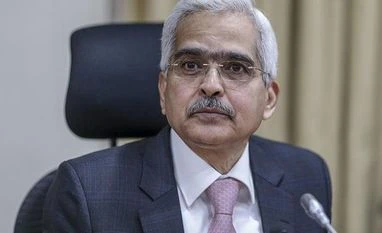
RBI Governor Shaktikanta Das
RBI Governor Shaktikanta Das | Photo: Bloomberg
Subrata Panda Mumbai
3 min read Last Updated : Mar 05 2022 | 12:36 AM IST
The Monetary Policy Committee (MPC) has not compromised on its primary mandate of price stability by continuing with an accommodative stance, even as central banks in developed countries are on course to adopt a tighter monetary policy in view of high inflation, after a prolonged period of ultra-loose monetary policy, Reserve Bank of India (RBI) Governor Shaktikanta Das said on Friday.

“We have continued with our accommodative stance based on our own domestic growth-inflation dynamics, amidst the current divergence in policy actions of central banks across the world,” the RBI governor, who chairs the MPC, said while speaking at the National Defence College. “Thus, we have used the flexibility embedded in the flexible inflation targeting (FIT) framework and implemented our monetary policies, without compromising on our primary mandate of price stability.”

In the recently concluded meeting of India’s rate-setting body, the six-member committee voted to keep the benchmark policy rates unchanged and continued with its accommodative stance, against market expectations, given the uneven economic recovery and the projections showing inflation softening next year.

The continuation of the accommodative stance was, however, criticised by one of the MPC members, Jayanth Varma — a professor of the Indian Institute of Management-Ahmedabad. According to Varma, a neutral stance was long overdue.

“…the continued harping on combating the ill effects of the pandemic has become counter-productive and deflects the focus of the MPC away from the core issue of addressing the recessionary trends that go back at least to 2019,” said Varma during the MPC discussions, the minutes of the meeting showed. Varma has been the sole dissenter among the members, voting against the accommodative stance in the last four MPC meetings.

Pointing out the difference in policy measures taken by the RBI and other major central banks to tackle the risks posed by the Covid-19 pandemic, Das said the RBI had undertaken unconventional measures even before exhausting the conventional policy space. 


The RBI has solely operated in the secondary market in facilitating the “evolution of the yield curve”, unlike some inflation-targeting emerging market economies’ central banks that made emergency provisions to operate in the primary market to finance the government directly, he said. 

On the global scenario, Das said a number of economies, including the major ones, were facing multi-decadal high inflation due to supply disruptions, tighter labour markets, fragility of the just-in-time inventory management, and geopolitical disturbances. As a result, central banks are in a difficult position when it comes to their policy actions to mitigate the risks. If central banks act aggressively to contain inflation, which may subside as normalcy prevails, they may run the risk of setting in recession, he said. On other hand, if they act too little and too late, they may be blamed for “falling behind the curve” and may have to do a lot of catching up later, which will be detrimental to growth, he added.

Das also highlighted the importance of central bank communication, given its multifarious responsibilities and ramifications of its actions. At the same time, he reminded, “Communication is also a double-edged sword.”

He said as part of the monetary policy, the RBI has actively used communication through a variety of tools – the MPC resolutions and minutes, post-policy statements, press conferences, speeches, and our other publications, to anchor expectations.

“The raison d'être of our actions … was communicated through speeches, post-policy press conferences and media interactions,” Das added.

One subscription. Two world-class reads.

Already subscribed? Log in

Subscribe to read the full story →
*Subscribe to Business Standard digital and get complimentary access to The New York Times

Smart Quarterly

₹900

3 Months

₹300/Month

SAVE 25%

Smart Essential

₹2,700

1 Year

₹225/Month

SAVE 46%
*Complimentary New York Times access for the 2nd year will be given after 12 months

Super Saver

₹3,900

2 Years

₹162/Month

Subscribe

Renews automatically, cancel anytime

Here’s what’s included in our digital subscription plans

Exclusive premium stories online

  • Over 30 premium stories daily, handpicked by our editors

Complimentary Access to The New York Times

  • News, Games, Cooking, Audio, Wirecutter & The Athletic

Business Standard Epaper

  • Digital replica of our daily newspaper — with options to read, save, and share

Curated Newsletters

  • Insights on markets, finance, politics, tech, and more delivered to your inbox

Market Analysis & Investment Insights

  • In-depth market analysis & insights with access to The Smart Investor

Archives

  • Repository of articles and publications dating back to 1997

Ad-free Reading

  • Uninterrupted reading experience with no advertisements

Seamless Access Across All Devices

  • Access Business Standard across devices — mobile, tablet, or PC, via web or app

Topics :Reserve Bank of Indiamonetary policy committeeRBIShaktikanta DasRBI Policy

Next Story



