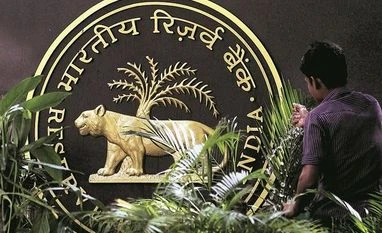
This opinion is being sought with a view to minimise concentration risk and promote innovation and competition.
A policy paper placed on the RBI website on Monday discusses the various pros and cons of having a single operator for payments. NPCI is the sole operator for various retail payments systems such as National Financial Switch (NFS), Immediate Payment Service(IMPS) and Unified Payments Interface (UPI), among others.
“NPCI has become an organisation, which is pivotal to the operations of many critical retail payment systems in the country with concentration of many tasks,” said the paper.
In October 2018, NPCI has processed nearly 48 per cent of the retail electronic payment transactions (excluding paper) in volume, aggregating to 15 per cent of value of the transactions.
The paper stated that the Indian payments space has evolved into few operators against a wide array of payment systems. This has raised concerns of concentration, need for competition and the resultant impact on economic efficiency and financial stability.
The paper questions whether it is better to have multiple and varied retail payment systems concentrated in a single entity or diversification across multiple operators. Other payment systems such as ATMs, wallets and card payments have multiple operators, unlike the country’s fastest growing payment mode – UPI.
A single operator for payments system would provide standardisation, economies of scale as well as better oversight and governance, said the paper. However, it could also result in systemic and operational risk, lack of innovation and upgradation and inefficiencies. “Monopolistic trends may negatively impact customers on charges, access and quality of service, etc,” it said.
The policy paper will also look at liberalising entry point norms for payment players. It would depend on the risk levels of the respective system and an analysis of capability-potential of the entities.
The RBI may consider an open and 'on-tap' the window of making applications for all payment systems. An ‘on-tap’ facility would mean the RBI will accept applications and grant licences for payment systems throughout the year. The paper added that specific “point of arrival” metrics could be prescribed so that entities unable to achieve capacity and scale within a defined time-line can exit.
The RBI invited comments on the policy paper from stakeholders and members of the public by February 20.
The central bank has focused on the payments space and taken a number of steps towards encouraging digital payments. Earlier this month, the central bank set up a committee to recommend how to ‘deepen’ digital payments.
In October last year, the RBI opposed creation of an independent payments regulator, which was recommended by a committee set up by the government. The central bank had sought to retain control of payment companies with itself.
The RBI also made a number of sweeping reforms for the payments industry last year, ranging from data localisation to wallet interoperability.
One subscription. Two world-class reads.
Already subscribed? Log in
Subscribe to read the full story →
Smart Quarterly
₹900
3 Months
₹300/Month
Smart Essential
₹2,700
1 Year
₹225/Month
Super Saver
₹3,900
2 Years
₹162/Month
Renews automatically, cancel anytime
Here’s what’s included in our digital subscription plans
Exclusive premium stories online
Over 30 premium stories daily, handpicked by our editors


Complimentary Access to The New York Times
News, Games, Cooking, Audio, Wirecutter & The Athletic
Business Standard Epaper
Digital replica of our daily newspaper — with options to read, save, and share


Curated Newsletters
Insights on markets, finance, politics, tech, and more delivered to your inbox
Market Analysis & Investment Insights
In-depth market analysis & insights with access to The Smart Investor


Archives
Repository of articles and publications dating back to 1997
Ad-free Reading
Uninterrupted reading experience with no advertisements


Seamless Access Across All Devices
Access Business Standard across devices — mobile, tablet, or PC, via web or app
)