RBI to spark money market recovery by reverse repo operation worth Rs 2 trn

The Reserve Bank of India will aim to drain 2 trillion rupees ($27.3 billion) of banking funds via a 14-day reverse repo operation on Jan. 15
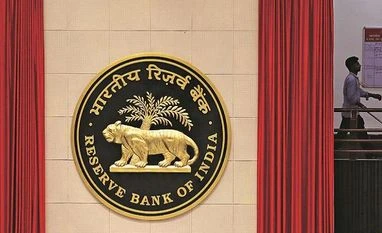
reserve bank of india, rbi
The RBI assured markets in last week’s statement that it will continue to ensure adequate liquidity.
Subhadip Sircar | Bloomberg
2 min read Last Updated : Jan 11 2021 | 9:24 AM IST
India’s key money-market rates and yields on short-term debt are set to rise after the central bank took its first small step to unwind emergency pandemic measures.

The Reserve Bank of India will aim to drain 2 trillion rupees ($27.3 billion) of banking funds via a 14-day reverse repo operation on Jan. 15, the central bank said in a statement late Friday. This is the first move in a phased normalization of the central bank’s liquidity operations, it said.

There has been growing consensus among traders that the RBI will have to start draining excess cash, as surging liquidity caused money-market rates to drop below the central bank’s interest-rate corridor and distort asset pricing. Quantum Asset Management Ltd. and IDFC Asset Management Ltd. have been among those forecasting that short-end rates will rise faster than the long-end as a result, though nobody expects the central bank to abandon its easy policy.

The announcement is “a clear signal from the central bank that it wants to slowly start the process of exiting from the extraordinary accommodation that remains in place,” said Kaushik Das, chief economist for India at Deutsche Bank AG. “The central bank wants to nudge the various short-term interest rates to converge to the reverse repo rate gradually.”

The RBI assured markets in last week’s statement that it will continue to ensure adequate liquidity. Excess cash in the banking system is currently around 6.7 trillion rupees, according to the Bloomberg Economics India Banking Liquidity Index.

Yields on one- to three-month bills could rise as much as 15-18 basis points, while those out to one year could climb 10 basis points, according to Madhavi Arora, lead economist at Emkay Global Financial Services Ltd.

The crash in short-term rates raised the risk of distortions in banks’ pricing of assets, and a further steepening of India’s yield curve, which is a concern for policy makers.

After the initial market reaction to the RBI’s statement, attention will turn to Friday’s reverse repo auction. The cut-off rate at which the central bank accepts bids will be a key signal of the interest-rate trajectory, according to a Kotak Mahindra Bank note.

One subscription. Two world-class reads.

Already subscribed? Log in

Subscribe to read the full story →
*Subscribe to Business Standard digital and get complimentary access to The New York Times

Smart Quarterly

₹900

3 Months

₹300/Month

SAVE 25%

Smart Essential

₹2,700

1 Year

₹225/Month

SAVE 46%
*Complimentary New York Times access for the 2nd year will be given after 12 months

Super Saver

₹3,900

2 Years

₹162/Month

Subscribe

Renews automatically, cancel anytime

Here’s what’s included in our digital subscription plans

Exclusive premium stories online

  • Over 30 premium stories daily, handpicked by our editors

Complimentary Access to The New York Times

  • News, Games, Cooking, Audio, Wirecutter & The Athletic

Business Standard Epaper

  • Digital replica of our daily newspaper — with options to read, save, and share

Curated Newsletters

  • Insights on markets, finance, politics, tech, and more delivered to your inbox

Market Analysis & Investment Insights

  • In-depth market analysis & insights with access to The Smart Investor

Archives

  • Repository of articles and publications dating back to 1997

Ad-free Reading

  • Uninterrupted reading experience with no advertisements

Seamless Access Across All Devices

  • Access Business Standard across devices — mobile, tablet, or PC, via web or app

Topics :Reserve Bank of IndiaReverse Repo RateRBIRBI repo rate

Next Story


