Why RBI woes won't end with the appointment of Shaktikanta Das as new guv

Surprisingly for a leader elected in a 2014 landslide after touting business-friendly credentials, Modi can't seem to hang on to an RBI governor
Graph
Daniel Moss | Bloomberg
Last Updated : Dec 12 2018 | 7:35 AM IST

Don't want to miss the best from Business Standard?

India can burn through as many central bankers as it wishes, but unless politicians let the Reserve Bank of India do its job, the economic setup will fall short of the nation's aspirations.

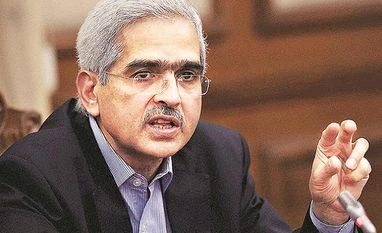
It's commendable that Prime Minister Narendra Modi moved swiftly to replace Urjit Patel, who quit this week as RBI governor. It's never good to have a vacuum in a job like that. The new guy is Shaktikanta Das, a seasoned economic bureaucrat who has worked closely with the central bank.

That's the good news. The bad news is that a new appointment was required at all.

Surprisingly for a leader elected in a 2014 landslide after touting business-friendly credentials, Modi can't seem to hang on to an RBI governor. This ought to be Economics 101, especially given that India is seen as one of a handful of countries likely to dominate world commerce this century.

The proximate cause of Patel's departure was pressure from the government to pay the finance ministry a bigger dividend and relax strictures placed on weak lenders. In the background was near constant sniping about interest rates and a sense that New Delhi just wasn't interested in letting the RBI's new monetary policy committee deliberate on its own, much less pursue any resulting agenda.

Recall the inglorious circumstances that propelled Patel to the role he just vacated. Raghuram Rajan, a rock-star global economist, walked away in 2016 rather than wait to see if he would get a second term. Rajan didn't care for Modi's reluctance to defend him from attacks emanating from the far right of the ruling BJP bloc. Rajan, accused of being too much a globalist, is now back at the University of Chicago, where he is once again a rock star.

After Rajan, Patel was supposed to be the one who stuck to his knitting. No freelancing on civil society and issues outside his remit. But the match didn’t last.
 
There's clearly a deeper problem than the identity of the person in the governor's suite. Maybe what India wants is the cachet of a modern central bank without the substance. You can have the form and structure of a state-of-the-art central bank, but unless the institution has political support, all that technocratic scaffolding counts for little.

News stories about Patel's resignation are dotted with references to how President Donald Trump makes life hard for Federal Reserve Chairman Jerome Powell. That's not the most apt analogy to explain what’s happening in India. The Fed's institutional framework is tested and proven, and the central bank is ultimately accountable to Congress, not the president. Trump's tantrums have little or no bearing on Fed decisions.

Perhaps the central bank with which the RBI should be compared is the People's Bank of China. As an established democracy, India ought to have a much easier time giving its central bank independence from politics. China isn't a democracy, and yet the PBOC has developed some degree of independence on operational issues, if not on policy. The disparity is illuminating.

Despite serious shortcomings, China’s central bank is moving generally in the right direction. Can the same be said of India’s?

One subscription. Two world-class reads.

Already subscribed? Log in

Subscribe to read the full story →
*Subscribe to Business Standard digital and get complimentary access to The New York Times

Smart Quarterly

₹900

3 Months

₹300/Month

SAVE 25%

Smart Essential

₹2,700

1 Year

₹225/Month

SAVE 46%
*Complimentary New York Times access for the 2nd year will be given after 12 months

Super Saver

₹3,900

2 Years

₹162/Month

Subscribe

Renews automatically, cancel anytime

Here’s what’s included in our digital subscription plans

Exclusive premium stories online

  • Over 30 premium stories daily, handpicked by our editors

Complimentary Access to The New York Times

  • News, Games, Cooking, Audio, Wirecutter & The Athletic

Business Standard Epaper

  • Digital replica of our daily newspaper — with options to read, save, and share

Curated Newsletters

  • Insights on markets, finance, politics, tech, and more delivered to your inbox

Market Analysis & Investment Insights

  • In-depth market analysis & insights with access to The Smart Investor

Archives

  • Repository of articles and publications dating back to 1997

Ad-free Reading

  • Uninterrupted reading experience with no advertisements

Seamless Access Across All Devices

  • Access Business Standard across devices — mobile, tablet, or PC, via web or app

Next Story


