
Happy people less likely to experience memory decline, shows study
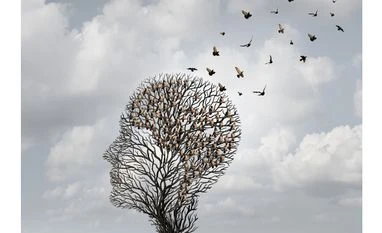
People who feel enthusiastic and cheerful -- what psychologists call "positive affect" -- are less likely to experience memory decline as they age, say researchers
 "Happy people less likely to experience memory decline, shows study")
WebinarsNew
Deep DiveNew
Explore Business Standard
People who feel enthusiastic and cheerful -- what psychologists call "positive affect" -- are less likely to experience memory decline as they age, say researchers
People who feel enthusiastic and cheerful -- what psychologists call "positive affect" -- are less likely to experience memory decline as they age, say researchers.
The result, published in the journal Psychological Science, adds to a growing body of research on positive affect's role in healthy aging.
"We may wish some memories could last a lifetime, but many physical and emotional factors can negatively impact our ability to retain information throughout life," said study authors from Northwestern University in the US.
For the findings, the research team analysed data from 991 middle-aged and older US adults who participated in a national study conducted at three time periods -- between 1995 and 1996, 2004 and 2006, and 2013 and 2014.
In each assessment, participants reported on a range of positive emotions they had experienced during the past 30 days.
In the final two assessments, participants also completed tests of memory performance. These tests consisted of recalling words immediately after their presentation and again 15 minutes later.
The researchers examined the association between positive affect and memory decline, accounting for age, gender, education, depression, negative affect, and extraversion.
"Our findings showed that memory declined with age," said study senior author Claudia Haase, an associate professor at Northwestern University.
"However, individuals with higher levels of positive affect had a less steep memory decline over the course of almost a decade," added Emily Hittner, a PhD graduate of Northwestern University and the paper's lead author.
Areas of future research might address the pathways that could connect positive affect and memory, such as physical health or social relationships, the study noted.
--IANS
bu/pgh
(Only the headline and picture of this report may have been reworked by the Business Standard staff; the rest of the content is auto-generated from a syndicated feed.)
First Published: Oct 30 2020 | 4:09 PM IST


 Connect with us on WhatsApp