NTPC, Concor freight advance saved Railways dipping operating ratio: CAG

Without freight advance from NTPC and Concor the operating ratio would've been worse, notes CAG
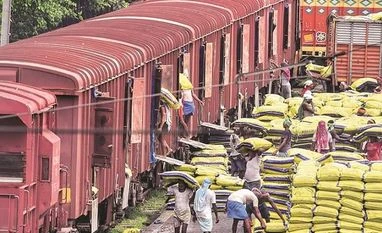
goods, transport, shipment, train, railways, logistics
The audit noted that there was a heavy dependence on transportation of coal which constituted around 47 per cent of the total freight earnings.
Shine Jacob New Delhi
3 min read Last Updated : Sep 24 2020 | 11:56 AM IST
The Comptroller and Auditor General of India (CAG) has criticised the Indian Railways for citing that it resorted to "window dressing" for presenting the working expenses and operating ratio in a better way.

It highlighted in an audit report that had there been no freight advance of Rs 8,351 crore received from NTPC and Container Corporation of India (Concor), the operating ratio (OR) for 2018-19 would have been 101.77 per cent instead of 97.29 per cent it achieved in the year. 

Operating ratio is calculated based on how much money the Railways spends to earn each rupee. It is the ratio of working expenses to traffic earnings. The lower the operating ratio, the better the financial strength of the Railways.

During 2018-19, against the target of 92.8 per cent in the Budget Estimates, the OR of railways was 97.29 per cent in 2018-19. This meant that railways spent Rs 97.29 to earn Rs 100.  During the year under review, the Indian Railways generated total internal earnings of Rs 190,507 crore against the targeted internal earnings of Rs 201,090 crore. The Railways could not achieve even revised estimate target of Rs 197,214 crore. The total internal earnings also included Freight advance from NTPC and CONCOR for transportation of goods in 2019-20.

The audit noted that there was a heavy dependence on transportation of coal which constituted around 47 per cent of the total freight earnings of Rs 51,067 crore during 2018-19. Any shift in bulk commodities transport pattern could affect the freight earnings significantly.

Also read: Indian Railways improves operating ratio by a tad to 97.3% in FY19

The net surplus in 2018-19 was Rs 3,773.86 crore. IR would have ended with a negative balance of Rs 7,334.85 crore but for receipt of advance freight and less appropriation to DRF and Pension Fund. Ministry of Railways (MoR) resorted to window dressing for presenting the working expenses and operating ratio in a better light.

MoR resorted to Extra Budgetary Resources for project financing from 2015-16 onwards. Financial assistance of Rs 1.5 trillion was agreed to by Life Insurance Corporation (LIC) over a period of five years (2015-20). Audit observed that the financing arrangement with LIC materialized partially due to regulatory constraints. During 2015-19, only Rs 16,200 crore could be raised from LIC. MoR recouped the shortfall of Rs 49,164 crore by raising funds through short-term/medium-term market borrowings which carry a higher rate of interest, the report said.  

Projects were to be completed during 2015-20. However, due to inefficiency of Zonal Railways and weak monitoring at the Railway Board level, the progress of projects was slow, it added. "Scrutiny of records relating to 395 projects funded from EBR revealed that 268 projects were still in progress as on 31 March 2019. This had resulted in blockade of Rs 48,536 crore EBR funds besides defeating the intended objective of generation of revenue for debt servicing,"the report said.

In addition, review of identification and sanction of projects for EBR funding revealed that financially unviable projects were sanctioned. An amount of Rs 15,922 crore was incurred from EBR towards 79 unremunerative projects. "The criteria for exclusion of projects pending land acquisition was not followed. 111 such projects were funded from EBR. None of these was completed as on 31 March 2019. There were instances of irregular utilization to the tune of Rs 1,495 crore from EBR funds," the report showed.

One subscription. Two world-class reads.

Already subscribed? Log in

Subscribe to read the full story →
*Subscribe to Business Standard digital and get complimentary access to The New York Times

Smart Quarterly

₹900

3 Months

₹300/Month

SAVE 25%

Smart Essential

₹2,700

1 Year

₹225/Month

SAVE 46%
*Complimentary New York Times access for the 2nd year will be given after 12 months

Super Saver

₹3,900

2 Years

₹162/Month

Subscribe

Renews automatically, cancel anytime

Here’s what’s included in our digital subscription plans

Exclusive premium stories online

  • Over 30 premium stories daily, handpicked by our editors

Complimentary Access to The New York Times

  • News, Games, Cooking, Audio, Wirecutter & The Athletic

Business Standard Epaper

  • Digital replica of our daily newspaper — with options to read, save, and share

Curated Newsletters

  • Insights on markets, finance, politics, tech, and more delivered to your inbox

Market Analysis & Investment Insights

  • In-depth market analysis & insights with access to The Smart Investor

Archives

  • Repository of articles and publications dating back to 1997

Ad-free Reading

  • Uninterrupted reading experience with no advertisements

Seamless Access Across All Devices

  • Access Business Standard across devices — mobile, tablet, or PC, via web or app

Topics :Indian RailwayscagCAG reportCAG report on Railways

Next Story



