As sanctions rise, Russian billionaires reshape fortunes while they can

But the truth is murkier - revealed in arcane corporate filings that can take days before becoming public
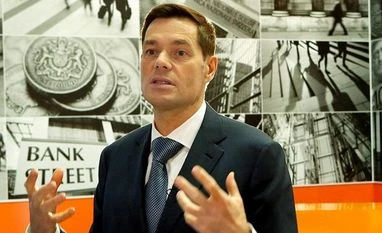
Alexey Mordashov shifted control of a $1.1 billion stake in London-based mining company Nordgold to his wife, Marina Mordashova
Benjamin Stupples, Devon Pendleton, & Jill R Shah | Bloomberg
3 min read Last Updated : Mar 14 2022 | 1:10 AM IST
In the dark of night on March 4, Italian police in the Ligurian port of Imperia encircled a 215-foot superyacht belonging to Russia’s fourth-richest person, Alexey Mordashov. 

The European Union had sanctioned the billionaire on February 28, days after Russia’s invasion of Ukraine. His extensive holdings in Europe — including “Lady M,” with its swimming pool and beauty salon — were seemingly frozen by authorities. 

Mordashov, however, had already made moves of his own. 

The same day the steel tycoon was sanctioned, he shifted control of a roughly $1.1 billion stake in London-based mining company Nordgold to his wife, Marina Mordashova. He also moved a chunk of his $1.7 billion stake in holiday tour-business TUI AG from a Cyprus holding company to one incorporated in the British Virgin Islands.

As lawmakers worldwide ratchet up pressure on some of Russia’s elite as a way to pressure President Vladimir Putin, they’ve often pointed to blocked superyachts, luxury real estate and sports clubs as signs their efforts are working. 

But the truth is murkier — revealed in arcane corporate filings that can take days before becoming public. They show Russian billionaires shifting ownership stakes, ditching board roles and giving up control, all part of a race to get ahead of officials in the US, UK and EU and restructure their assets while they still can.

One example is Mikhail Fridman, who was sanctioned by the EU alongside Mordashov and his business partner Petr Aven. Filings show he ceded control two days later of at least three companies in the UK, where he’s not sanctioned. He transferred those shares to a former employee at LetterOne, the investment firm he co-founded.
Mikhail Fridman ceded control of at least three companies in the UK two days after being sanctioned by the EU
The list goes on — and includes those subject to a new round of EU sanctions this week.

Vadim Moshkovich cut his stake in agricultural conglomerate Ros Agro to below 50 per cent before the sanctions hit. Andrey Melnichenko withdrew as a beneficiary of his roughly $17 billion stake in fertiliser producer EuroChem and thermal coal supplier Suek effective March 9 — the day he and others were sanctioned. That didn’t stop Italian authorities from seizing Melnichenko’s $580 million-euro superyacht in Trieste, Italy. There is no justification for Melnichenko to be on an EU sanctions list, and he will be challenging the measures, a spokesman for Melnichenko said in an email Saturday after the seizure was announced.  Sanctions require compliance from industries, and companies have to quickly dig through corporate ownership layers to find, freeze and report relevant accounts. In the U.S., they share findings with the Office of Foreign Assets Control, or OFAC.

It may take time for financial institutions to identify associated accounts of a sanctioned individual that aren’t already widely known, said Howard Mendelsohn, chief client officer at Kharon.

Shuffle time

Someone who is sanctioned can use that as a window to hire lawyers, consider ownership changes and otherwise move assets around, he said. “They might be thinking, ‘I might have a little time here before anyone figures out what all my companies are, especially those that are majority-owned,” Mendelsohn said. “I’m going to shuffle. I’m going to take my daughter, my wife, my employee or employees, and I’m going to put this stuff in other names. It’s going to show up and it’s going to be documented that I’m not the majority owner.”

One subscription. Two world-class reads.

Already subscribed? Log in

Subscribe to read the full story →
*Subscribe to Business Standard digital and get complimentary access to The New York Times

Smart Quarterly

₹900

3 Months

₹300/Month

SAVE 25%

Smart Essential

₹2,700

1 Year

₹225/Month

SAVE 46%
*Complimentary New York Times access for the 2nd year will be given after 12 months

Super Saver

₹3,900

2 Years

₹162/Month

Subscribe

Renews automatically, cancel anytime

Here’s what’s included in our digital subscription plans

Exclusive premium stories online

  • Over 30 premium stories daily, handpicked by our editors

Complimentary Access to The New York Times

  • News, Games, Cooking, Audio, Wirecutter & The Athletic

Business Standard Epaper

  • Digital replica of our daily newspaper — with options to read, save, and share

Curated Newsletters

  • Insights on markets, finance, politics, tech, and more delivered to your inbox

Market Analysis & Investment Insights

  • In-depth market analysis & insights with access to The Smart Investor

Archives

  • Repository of articles and publications dating back to 1997

Ad-free Reading

  • Uninterrupted reading experience with no advertisements

Seamless Access Across All Devices

  • Access Business Standard across devices — mobile, tablet, or PC, via web or app

Topics :Vladimir PutinRussia Ukraine ConflictUS sanctionsEuropean UnionbillionairesKiev Ukraine

Next Story



