
Can driverless cars disrupt airline industry? Here's what researchers say
A future with driverless cars means people will have more options to avoid driving on their own, beyond trains and buses
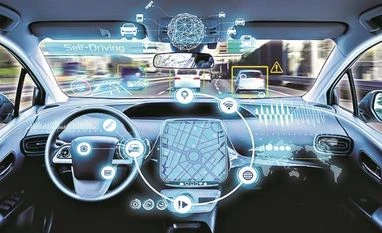 "Can driverless cars disrupt airline industry? Here's what researchers say")
premium
Explore Business Standard
A future with driverless cars means people will have more options to avoid driving on their own, beyond trains and buses
Imagine someone who lives in Atlanta and needs to travel to Washington, D.C., for business. This is about a 10-hour drive. A flight takes about two hours, assuming no delays. Add to that the drive to the airport, checking in, the security line and waiting at the gate. Upon arrival in D.C., it may take another 30 minutes to pick up any checked bags and find a rental car – and even more time to drive to the specific destination. The average person would estimate a total travel time of four to five fours. Most people would choose to fly instead of driving themselves.
However, if they could have a fully driverless car take them there, the choice changes. Passengers could eat, drink, work and sleep during the 10-hour drive. They could leave whenever they want, and pack whatever they want – including liquids and pocketknives – with no searches or scans. When they get to D.C., they wouldn’t have to find a rental car and navigate to the actual place they’re going.
Which would you choose? Now imagine the self-driving car has a reclining seat with actual legroom, or even a bed. It’s more than a little tempting.
As experts in public opinion research, we know that the American public loves how quickly flights can cover large distances, but hates the security checks, long lines, delays, risk of losing baggage and overall hassle of the flying experience.
We also know that at the moment, most people are reluctant to ride in driverless vehicles – including school buses and even ambulances that could speed their treatment in an emergency. However, our data also shows that as people learn about the benefits of driverless cars, they become more accepting of the new technology. Over time, people will feel comfortable using autonomous cars (and ambulances), just like they adjusted to riding in the first automobiles.
A future with driverless cars means people will have more options to avoid driving on their own, beyond trains and buses.
In our study, we showed people trips of different lengths and asked them to choose whether they would rather drive themselves, take a flight or ride in a self-driving car. In general, the data indicated that people always preferred driverless vehicles over manual driving. Taking a driverless car got even more attractive if people were told that after flying, they would need a rental car in their destination city.
On short trips, with a five-hour drive, two-thirds of people would rather drive themselves. That didn’t change much when they were offered a self-driving car, unless they were told they would need a car in their destination city. Then nearly three-quarters of people preferred a self-driving car to flying.
As trips got longer, people were increasingly likely to prefer flying, but self-driving cars were still a compelling option. On the longest trips we asked about, with a 45-hour drive, only about one in 10 people preferred driving themselves – but that changed to one in six when the option was to have a car drive itself.
In follow-up work, we’re looking at how the costs of each transportation method might affect consumers’ choices – including whether they’re traveling alone or in a group with friends or family members.
Losing even one in 10 customers would substantially reduce airlines’ revenue. They don’t make much money on each flight as it is; less income would likely cause them to shrink their service, flying fewer routes less frequently.
The problem wouldn’t just be customers who chose not to fly. Some passengers might split trips between self-driving cars and airplanes, which would further reduce airlines’ revenue. For instance, a person in Savannah, Georgia, who wants to go to London could choose to change planes in Atlanta – or take a self-driving car to the Atlanta airport, and skip the layover.
These changes could substantially change the aviation industry, with airlines ordering fewer airplanes from manufacturers, airports seeing fewer daily flights and lower revenue from parking lots, and even airport hotels hosting fewer guests. The future of driverless cars is appealing to consumers – which means the future of commercial flight is in danger.
Stephen Rice, Professor of Human Factors, Embry-Riddle Aeronautical University and Scott Winter, Assistant Professor of Graduate Studies, Embry-Riddle Aeronautical University
This article is republished from The Conversation under a Creative Commons license. Read the original article.
Already subscribed? Log in
Subscribe to read the full story →

3 Months
₹300/Month
1 Year
₹225/Month
2 Years
₹162/Month
Renews automatically, cancel anytime

Over 30 premium stories daily, handpicked by our editors


News, Games, Cooking, Audio, Wirecutter & The Athletic
Digital replica of our daily newspaper — with options to read, save, and share


Insights on markets, finance, politics, tech, and more delivered to your inbox
In-depth market analysis & insights with access to The Smart Investor


Repository of articles and publications dating back to 1997
Uninterrupted reading experience with no advertisements


Access Business Standard across devices — mobile, tablet, or PC, via web or app
First Published: Jun 11 2019 | 10:09 AM IST


