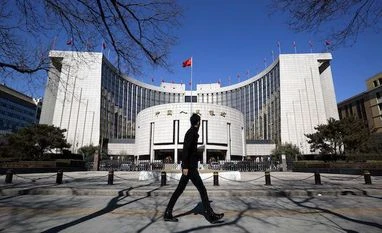
China central bank cuts reserve requirement ratio as economy slows

The People's Bank of China will reduce the reserve requirement ratio by 0.5 percentage point for all banks except those that are already on the lowest level of 5%, according to a statement

China central bank, People’s Bank of China
Photo: Bloomberg
Bloomberg News| Bloomberg
2 min read Last Updated : Dec 06 2021 | 3:16 PM IST
China’s central bank cut the amount of cash most banks must hold in reserve, providing a liquidity boost to a slowing economy facing a worsening property slump and putting China on a clearly different policy trajectory than many other central banks.

The People’s Bank of China will reduce the reserve requirement ratio by 0.5 percentage point for all banks except those that are already on the lowest level of 5%, according to a statement published Monday. The cut will be effective on December 15, according to the statement, which said the weighted average ratio for financial institutions will be 8.4% after the cut.

The cut is estimated to release 1.2 trillion yuan ($188 billion) of liquidity, the PBOC said in a Q&A accompanying the announcement. The move was signaled by Premier Li Keqiang last week when he said that authorities would cut the RRR at an appropriate time to help smaller companies, and is the second reduction this year. 

The decision comes after recent data showed the economy and industry stabilizing, although Beijing’s tightening curbs on the property market have led to a slump in construction and worsened a liquidity crisis at developer China Evergrande Group and other real-estate firms. 

Even with the deepening housing market slump, authorities had been restrained in adding new support policies, holding monetary policy steady and maintaining a measured pace of fiscal spending. However, the People’s Bank of China signaled an easing bias in the latest monetary policy report last month, while the State Council urged local governments to speed up spending. 

A cut in the reserve ratio doesn’t directly lower borrowing costs, but quickly frees up cheap funds for banks to lend. It could also help replace maturing central bank loans.

One subscription. Two world-class reads.

Already subscribed? Log in

Subscribe to read the full story →
*Subscribe to Business Standard digital and get complimentary access to The New York Times

Smart Quarterly

₹900

3 Months

₹300/Month

SAVE 25%

Smart Essential

₹2,700

1 Year

₹225/Month

SAVE 46%
*Complimentary New York Times access for the 2nd year will be given after 12 months

Super Saver

₹3,900

2 Years

₹162/Month

Subscribe

Renews automatically, cancel anytime

Here’s what’s included in our digital subscription plans

Exclusive premium stories online

  • Over 30 premium stories daily, handpicked by our editors

Complimentary Access to The New York Times

  • News, Games, Cooking, Audio, Wirecutter & The Athletic

Business Standard Epaper

  • Digital replica of our daily newspaper — with options to read, save, and share

Curated Newsletters

  • Insights on markets, finance, politics, tech, and more delivered to your inbox

Market Analysis & Investment Insights

  • In-depth market analysis & insights with access to The Smart Investor

Archives

  • Repository of articles and publications dating back to 1997

Ad-free Reading

  • Uninterrupted reading experience with no advertisements

Seamless Access Across All Devices

  • Access Business Standard across devices — mobile, tablet, or PC, via web or app

Topics :ChinaPeople’s Bank of ChinaBanks

Next Story