China may ban short-term dollar bond sales to tighten financing options

NDRC to limit builders' bond proceeds to only refinancing
China, yuan
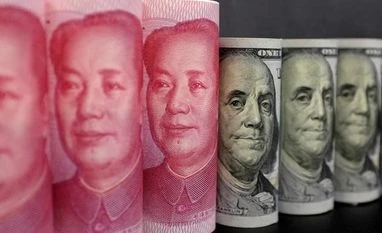
Chinese 100 yuan banknotes and US 100 dollar banknotes
Bloomberg
Last Updated : Jun 28 2018 | 2:37 PM IST
China is slowing approvals for offshore bonds and considering whether to ban short-dated issuance in dollars, according to people familiar with the matter, moves that would reduce financing options for the developers that have led record sales of such debt.

The National Development & Reform Commission is weighing a ban on the sale of dollar bonds with tenors of less than one year, said the people, who asked not to be named because they’re not authorized to speak publicly. The regulator is already restricting offshore bond issuance quotas for Chinese companies, people said.
 
Selling bonds that mature in 364 days has become a popular tactic among Chinese issuers -- especially those in real estate -- because they didn’t require pre-approval from the NDRC. The regulator has publicly signaled that it’s wary of the offshore issuance boom, saying in a Wednesday statement that developers are only allowed to use proceeds to refinance existing debt, that some companies are borrowing amounts that are out of proportion with their profits, and that many don’t have foreign-currency revenues to protect themselves against the yuan’s slide.
 
The new measures threaten to further constrain cash-strapped property developers even as concerns about China’s financial risks ripple across markets. And it’s not just funding problems that are plaguing the industry: this week, the housing industry escalated a crackdown on property speculation, while the nation’s policy banks tightened approvals on new lending for shanty-town redevelopment projects.
 
“A ban on issuance only adds to the refinancing risks and defaults amid a weak yuan," said Owen Gallimore, head of credit strategy at Australia & New Zealand Banking Group Ltd. “It’s not good that companies cannot fund themselves in a market."
The NDRC, which regulates foreign debt sales by companies, didn’t immediately respond to a faxed message seeking comment. Calls went unanswered.
 
In the regulator’s Wednesday statement, it said that the use of proceeds from builders’ overseas bond sales must be limited to just refinancing, instead of investing in domestic property projects and replenishing working capital. Foreign debt sales from property developers and local government financing vehicles have increased, the NDRC said. “Some of the issuers have low profits, which don’t match the amount of foreign debt they are raising,” according to the statement.
 
“Weaker developers may get hit more due to the restrictions from the regulators, but this is how the bond market should be,” said Anne Zhang, executive director for fixed income, currencies and commodities at JPMorgan Private Bank in Asia. “Lower quality real estates may go for collateralized loan market with covenants, not covenant light unsecured bond market. I think some of them would need to sell asset for future debt repayments.”
 
Leverage Focus
 
“The government is trying to remind developers that the deleveraging campaign is still a focus. While the authorities have been ensuring that funding channels remain open, this is to ensure there is no disruption to refinancing,” said Sandra Chow, senior analyst at CreditSights in Singapore. “It is not meant to allow developers to pursue aggressive business expansion.”
Real estate stocks and bonds were under pressure Thursday.
 
Most Chinese property dollar bonds fell, with China Evergrande Group and Fantasia Holdings Group Co. leading the losses, according to ICE BofAML index. In the past two years, Chinese developers have sold about $10 billion of dollar bonds that mature in less than a year, Bloomberg-compiled data show.
 
An index of shares in 22 Chinese developers has tumbled 12 percent since Monday as investors have grown increasingly nervous about the outlook for the sector. The gauge fell for a fourth straight day on Thursday, with Longfor Properties Co. and Shimao Property Holdings Ltd. the biggest decliners, sinking 5.9 percent and 5.5 percent respectively as of 2:31 p.m. local time.
 
The NDRC is trying to control offshore issuance by weaker and less competitive developers who may be over-relying on offshore capital markets, said Christopher Yip, an analyst at S&P Global Ratings in Hong Kong.
 
Yuan Risks
 
Chinese builders, faced with bond payments of $77.4 billion in the domestic and overseas markets through 2019, have been reeling from tightened liquidity at home induced by a clampdown on shadow financing. That’s prompted them to sell debt in the offshore market, with dollar bond sales reaching a record $27.5 billion this year.
 
While the NDRC’s latest moves would limit their use of that offshore funding venue, they could also shield issuers from an increase in debt-servicing costs if the yuan keeps falling. China’s currency is down more than 3 percent against the greenback in the past two weeks.
 
The latest developments are positive for the medium term stability of the industry, according to Charles Macgregor, head of Asia markets at Lucror Analytics in Singapore. "We do not see this as a likely stimulus for defaults – that is not in the interests of the NDRC," he said.
 
“My view would be that that is just to limit the currency risks that exist. We’ve seen many periods of history that it’s dangerous to borrow too much in a foreign currency because not only do you have interest rate costs but also FX risks,” said Nicholas Wall, London-based fixed income portfolio manager at Old Mutual Global Investors in Hong Kong. Dollar appreciation “could increase risks for sectors that are tremendously important for China and Chinese growth,” he said.

One subscription. Two world-class reads.

Already subscribed? Log in

Subscribe to read the full story →
*Subscribe to Business Standard digital and get complimentary access to The New York Times

Smart Quarterly

₹900

3 Months

₹300/Month

SAVE 25%

Smart Essential

₹2,700

1 Year

₹225/Month

SAVE 46%
*Complimentary New York Times access for the 2nd year will be given after 12 months

Super Saver

₹3,900

2 Years

₹162/Month

Subscribe

Renews automatically, cancel anytime

Here’s what’s included in our digital subscription plans

Exclusive premium stories online

  • Over 30 premium stories daily, handpicked by our editors

Complimentary Access to The New York Times

  • News, Games, Cooking, Audio, Wirecutter & The Athletic

Business Standard Epaper

  • Digital replica of our daily newspaper — with options to read, save, and share

Curated Newsletters

  • Insights on markets, finance, politics, tech, and more delivered to your inbox

Market Analysis & Investment Insights

  • In-depth market analysis & insights with access to The Smart Investor

Archives

  • Repository of articles and publications dating back to 1997

Ad-free Reading

  • Uninterrupted reading experience with no advertisements

Seamless Access Across All Devices

  • Access Business Standard across devices — mobile, tablet, or PC, via web or app

Next Story



