An American became the first confirmed non-Chinese victim of the new coronavirus on Saturday while a Japanese man also died with symptoms consistent with the disease, as the epidemic looked set to pass the death toll from the SARS pandemic.
The 60-year old US citizen diagnosed with coronavirus died at Jinyintan Hospital in China's Wuhan, the epicentre of the virus outbreak, on Feb. 6, a US embassy spokesman in Beijing said.
"We offer our sincerest condolences to the family on their loss," the spokesman told Reuters. "Out of the respect for the family's privacy, we have no further comment." A Japanese man in his sixties and hospitalised with pneumonia in Wuhan, in central Hubei province, also died after suffering symptoms consistent with the new coronavirus, Japan's foreign ministry said. But owing to difficulties in diagnosing the disease, the cause of death was given as viral pneumonia, the ministry said citing Chinese medical authorities.
As of noon on Thursday, 17 foreigners were being quarantined and treated for the disease in China, according to the latest government figures.
The death toll in mainland China rose by 86 to 722 on Saturday, according to authorities, and is poised to pass the 774 deaths recorded globally during the 2002-2003 pandemic of Severe Acute Respiratory Syndrome (SARS), another coronavirus that jumped from animals to humans in China.
During the SARS outbreak between November 2002 and July 2003, the number of reported cases was 8,098, suggesting a far lower transmission rate than the latest coronavirus, but a higher mortality rate.
Most of the deaths in China have occurred in and around Wuhan. Hubei officials on Saturday reported 81 new deaths, 67 of those in Wuhan, a city in virtual lockdown. Across mainland China, the number of outstanding cases stood at 31,774.
Beijing's communist leadership has sealed off cities, cancelled flights and closed factories to contain the epidemic, with ripple effects for global markets and businesses dependent on the world's second-biggest economy.
Saturday marked the final day of the Lunar New Year celebrations, usually characterised by family gatherings, fireworks, riddle-guessing and the lighting of lanterns.
This year, most people were eating dumplings, a traditional custom, at home alone. On national television a gala show will feature recitation of poems on counter-virus efforts instead of the usual music and dancing.
News of the death on Friday of Li Wenliang, a doctor who was reprimanded by police for raising the alarm about the new coronavirus, sparked sorrow and outrage on Chinese social media and rekindled memories of how Beijing was slow to tell the world about the SARS outbreak.
Hong Kong on Saturday was introducing a two-week quarantine for all people arriving from the mainland, or who have been there during the previous 14 days. Matthew Cheung, chief secretary for administration, said Hong Kong people returning from the mainland must stay home for a fortnight or risk a fine or jail.
Thailand reported seven new cases, including three Thais and four Chinese, bringing the total reported in the country to 32, among the world's highest number of infections outside of China.
Taiwan and Hong Kong urged residents not to hoard goods such as toilet paper amid signs of panic buying, and the World
Health Organization (WHO) chief warned of worldwide shortages of medical gowns, masks and other protective equipment.
Royal Caribbean Cruises Ltd on Friday banned "any guests holding a Chinese, Hong Kong or Macau passports, regardless of when they were there last" from boarding the company's ships.
WHO emergency expert Mike Ryan said reports of Asians being shunned in the West over a perceived connection to
coronavirus was "utterly and completely unacceptable and it needs to stop." Taiwan’s government said that starting from Monday it would suspend all direct passenger and freight shipping between the island and China. It had already decided to suspend most flights from Monday between Taiwan to China.
US Secretary of State Mike Pompeo on Friday said the United States was prepared to spend up to $100 million to assist
China and support coronavirus efforts by the WHO.
The United States has sent nearly 17.8 tons of medical supplies to China, including masks, gowns and respirators, a State Department official said.
The WHO said out of $675 million it is seeking for its coronavirus response through April, it has received pledges of $110 million, $100 million of that from the Gates Foundation.

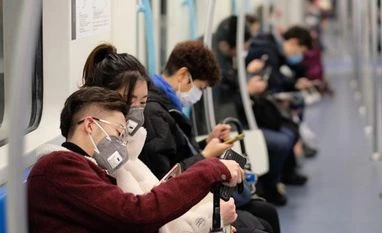 "Coronavirus death toll crosses 700 in China, set to surpass SARS pandemic")









