Ross W Ulbricht, the founder of Silk Road, a notorious online marketplace for the sale of heroin, cocaine, LSD and other illegal drugs, was sentenced to life in prison on Friday in Federal District Court in Manhattan.
Ulbricht, 31, was sentenced by the judge, Katherine B Forrest, for his role as what prosecutors described as "the kingpin of a worldwide digital drug-trafficking enterprise."
Ulbricht had faced a minimum of 20 years in prison on one of the counts for which he was convicted. But in handing down a much longer sentence, Forrest told Ulbricht that "what you did in connection with Silk Road was terribly destructive to our social fabric."
Transactions were made using the virtual currency Bitcoin, and Ulbricht, operating under the pseudonym Dread Pirate Roberts, took in millions of dollars in commissions, prosecutors have said. They said Ulbricht had "developed a blueprint for a new way to use the Internet to undermine the law and facilitate criminal transactions," and that his conviction was "the first of its kind, and his sentencing is being closely watched."
Forrest echoed that message. "What you did was unprecedented," she told Ulbricht, "and in breaking that ground as the first person," he had to pay the consequences. Anyone who might consider doing something similar, the judge added, needed to understand clearly "and without equivocation that if you break the law this way, there will be very serious consequences."
Ulbricht was convicted in February on charges that included engaging in a continuing criminal enterprise and distributing narcotics on the Internet, each of which carried potential life terms.
The government had also alleged that he had solicited the murders of people he saw as threats to his operation, and that at least six deaths were attributable to drugs bought on the site."Make no mistake, Ulbricht was a drug dealer and criminal profiteer who exploited people's addictions and contributed to the deaths of at least six young people," Preet Bharara, the United States attorney for the Southern District of New York, said in a statement.
At the hearing, the mother of one such victim and the father of another each delivered emotional statements to the judge. The father, identified as Richard, whose 25-year-old son had died after using heroin that prosecutors said was purchased on Silk Road, accused Ulbricht of being driven by greed in making drugs easily available to vulnerable people.
"I strongly believe that my son would be here today if Ross Ulbricht had not created Silk Road," he said, adding, "All Ross Ulbricht cared about was his growing pile of bitcoins."
Ulbricht, wearing dark blue jail garb, sat quietly between two of his lawyers, Joshua L Dratel and Lindsay A Lewis, during the proceeding, and later addressed the judge.Standing with his hands clasped before him, he spoke without notes for about 10 minutes, sniffling and appearing to choke back tears.
"I remember clearly why I created the Silk Road," Ulbricht said. "I wanted to empower people to be able to make choices in their lives, for themselves and to have privacy and anonymity."
"I'm not saying that because I want to justify anything that's happened. I just want to set the record straight, because from my point of view, I'm not a self-centered sociopathic person that was trying to express some kind of inner badness. I just made some very serious mistakes."
Ulbricht, who obtained a BS in physics from the University of Texas at Dallas in 2006 and a master's in materials science and engineering from Pennsylvania State University in 2009, drew at one point on his background.
He said that he realized that "the laws of nature are much like the laws of man.""Gravity doesn't care if you agree with it - if you jump off a cliff you are still going to get hurt. And even though I didn't agree with the law, I still have been convicted of a crime and must be punished. I understand that now and I respect the law and authority now."
Forrest acknowledged that Mr. Ulbricht did not fit a "typical criminal profile."But, the judge added: "There must be no doubt that no one is above the law, no matter the education or the privileges. All stand equal before the law.
After the proceeding, Dratel said the case would be appealed. "We have issues with the prejudice of uncharged unproven conduct that drove this sentence dramatically. It was not about the crime that he was convicted of. This was about appeals to emotion." He added, "I'm disappointed tremendously."
Ulbricht's mother, Lyn, said her son was "looking at his life being destroyed.""I know that if Ross walked out of that prison tomorrow law enforcement would never hear from him again," Ulbricht said, adding, "Ross is no more a threat to society than I am."
During his trial, Mr. Ulbricht's defense maintained that he had created the website but had turned it over to others before being lured back in and set up to take the fall. (The site was shut down by the Federal Bureau of Investigation after Mr. Ulbricht was arrested in 2013.) Mr. Dratel had denied that his client was the mysterious Dread Pirate Roberts, a character drawn from the book and movie "The Princess Bride."
But Judge Forrest left no doubt that she believed he was behind the enterprise, planning it carefully and intending to flout the law. "You were captain of the ship as Dread Pirate Roberts and you made your own law," she said.
She dismissed the defense's argument that because Silk Road had operated online, it was safer than traditional street-level drug dealing. She described how Silk Road had expanded the market for drugs and the demand by users, and cited collateral damage, from the violence associated with drug production overseas to addiction, crime and the destruction of families. Silk Road, she said, was just "a step in the chain."
© 2015 The New York Times News Service

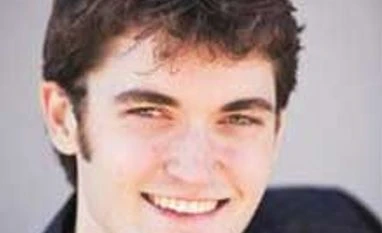 "Creator of Silk Road website sentenced for life")


 Connect with us on WhatsApp