Oil prices tumbled on Monday after a meeting by major exporters in Qatar collapsed without an agreement to freeze output, leaving the credibility of the Opec producer cartel in tatters and the world awash with unwanted fuel.
Tensions between Saudi Arabia and Iran were blamed for the failure, which revived industry fears that major government-controlled producers will increase their battle for market share by offering ever-steeper discounts.
“Opec’s credibility to coordinate output is now very low,” said Peter Lee of BMI Research, a unit of rating agency Fitch. “This isn’t just about oil for the Saudis. It’s as much about regional politics.”
Morgan Stanley said that the failed deal “underscores the poor state of Opec relations,” adding that “we now see a growing risk of higher Opec supply,” especially as Saudi Arabia threatened it could hike output following the failed deal.
Oil prices have fallen by as much as 70 per cent since mid-2014 as producers have pumped 1 to 2 million barrels of crude every day in excess of demand, leaving storage tanks around the world filled to the rims with unsold fuel.
Sunday’s meeting in Qatar’s capital Doha had been expected to finalise a deal to freeze output at January levels until October 2016 in an attempt to slow that ballooning oversupply. But the agreement fell apart after top exporter Saudi Arabia demanded that Iran, which was not represented, should also sign up.
The Sunni Muslim kingdom of Saudi Arabia and Shia Islamic republic of Iran compete for influence in the Middle East, where they are currently fighting proxy wars in Syria and Yemen.
Brent crude futures fell almost 7 per cent in early trading on Monday before recovering to $40.97 per barrel at 0647 GMT, still down 2.15 per cent since their last settlement. Traders said only an oil worker strike in Kuwait had prevented Brent from tumbling below $40 per barrel, while a cut in US drilling down to 2009 levels had prevented steeper falls there.
Benchmark US crude futures were down more than 5 per cent at $38.31 a barrel.
Goldman Sachs said the Doha no-deal could a “bearish catalyst” for US crude prices, which it forecast would average $35 a barrel in the current quarter. Analysts said that the failed agreement would also impact the broader economy.
“In the near-term, lower oil prices are bound to weigh on investor confidence and could exacerbate financial volatility,” said Frederic Neumann, co-head of Asian economics research at HSBC. “Concerns over financial stability in the energy sector and a further fall in drilling capex are headwinds to growth against an already fragile global economic backdrop.”
With producers such as Saudi Arabia and Russia pumping near record levels and Iran also increasing output following the lifting of international sanctions against it last January, there is no end in sight for the global oil glut.
Iran was the only Opec member not to attend the Doha talks.
Despite calls on Saudi Arabia to save the agreement, Riyadh, Opec’s de facto leader, insisted that all 13 members must take part in any freeze.
“It seems that for the Saudis politics and national pride are still more important than the price of oil,” said Ralph Leszczynski of shipbroker Banchero Costa.
Iran has refused to stabilise production, seeking to regain market share post-sanctions.
“Iran has no reason to auto-sanction themselves when they are just trying to get back some of the market share they lost in recent years due the western-imposed sanctions,” Leszczynski added.
While tumbling oil prices hurt producers, straining the budgets of energy exporters from Russia to Malaysia, they can also benefit consumers.
Asked whether the failed talks could result in further crude supply discounts for his company, Daniel Purba of Indonesia’s Pertamina, a major importer of refined products, said: “We hope so.”
As a result of the failure at Doha, Barclays said that Brent would likely average $36 per barrel during the second quarter of this year as a global glut continued unabated.
“This meeting and its outcome should have built... trust among producers for possible future cooperation and coordinated action. In this regard, the meeting was a complete failure,” Barclays said, adding that “the failure of the talks gives the market another clear indication that Opec’s relevance in this market environment has faded.”

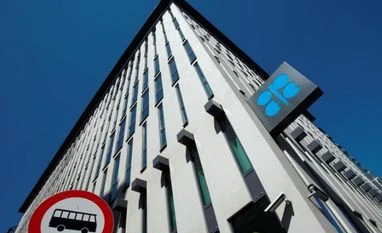 "Doha no-deal hits Opec credibility")


 Connect with us on WhatsApp