
Dollar rises broadly, yuan slumps as China's Covid unrest rattles sentiment
The dollar gained broadly as protests against Covid restrictions in China stoked uncertainty and dented sentiment, sending the yuan sliding
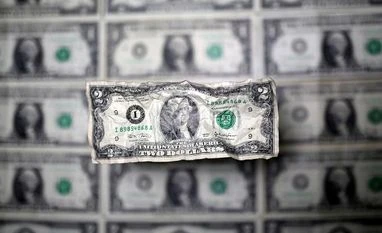 "Dollar rises broadly, yuan slumps as China's Covid unrest rattles sentiment")
WebinarsNew
Deep DiveNew
Explore Business Standard
The dollar gained broadly as protests against Covid restrictions in China stoked uncertainty and dented sentiment, sending the yuan sliding
The dollar gained broadly on Monday as protests against COVID restrictions in China stoked uncertainty and dented sentiment, sending the yuan sliding and pushing nervous investors toward the safe-haven greenback.
The COVID protests have flared across China and spread to several cities in the wake of a deadly fire in Urumqi in the country's far west, with hundreds of demonstrators and police clashing in Shanghai on Sunday night.
Against the offshore yuan, the dollar rose 0.76% in early Asia trade to 7.2456.
The Aussie, which is often used as a liquid proxy for the yuan, fell 0.61% to $0.6714, while the kiwi slumped 0.5% to $0.6216.
"That's a new layer of concern in China that needs to be watched closely," said Rodrigo Catril, a currency strategist at National Australia Bank (NAB), of the protests.
"Certainly at the start of the week, it will set the tone. And I suppose what will be the focus as well, will not only be the imposition of restrictions that China may introduce, if any, but the level of contagion as well."
In an attempt to bolster China's slowing economy - which has struggled under its stringent COVID restrictions - the nation's central bank said on Friday that it would cut the reserve requirement ratio (RRR) for banks by 25 basis points (bps), effective from Dec. 5.
"If the RRR cut is the only monetary policy tool that the PBOC is going to implement, it may not lead to a significant increase in bank lending," said Iris Pang, chief economist for Greater China at ING.
"Companies are currently facing weaker retail sales from a higher number of COVID cases and falling home prices from unfinished home projects."
Elsewhere, the euro fell 0.25% to $1.0377, while sterling was down 0.24% at $1.2060.
The Japanese yen edged about 0.1% lower to 139.27 per dollar.
The latest developments in China have put a pause on the U.S. dollar's decline, which had been softening over the past few weeks on hopes that the Federal Reserve would soon slow its pace of rate hikes - a view that was supported by the Fed's November meeting minutes released last week.
Against a basket of currencies, the U.S. dollar index was down 0.08% at 106.25, but off its recent three-month low of 105.30.
Overall, however, it remains on track for a monthly decline of nearly 5%, the largest in 12 years as investors latched on to the signs of a turn in the Fed's hawkish policy stance.
Fed Chair Jerome Powell is due to speak on the outlook for the U.S. economy and the labour market at a Brookings Institution event on Wednesday, which will likely provide more clues on the U.S. monetary policy outlook.
"(He) is pretty likely to push back a little bit on that ease of financial conditions that we've seen in recent times. Ultimately, from a Fed perspective, the main concern is the fight against inflation, and that battle hasn't yet been won," said NAB's Catril.
(Reporting by Rae Wee; Editing by Shri Navaratnam)
(Only the headline and picture of this report may have been reworked by the Business Standard staff; the rest of the content is auto-generated from a syndicated feed.)
First Published: Nov 28 2022 | 9:10 AM IST

