Home / World News / France to allow some Huawei's equipment in its 5G network: Report
France to allow some Huawei's equipment in its 5G network: Report
Up to now, sources close to the French telecoms industry have said they fear Huawei will be barred in practice even if no formal ban is announced.
premium
ANSSI had decided to approve the use of Huawei gear, but only for what they described as non-core parts of the network, as these pose less significant security risks
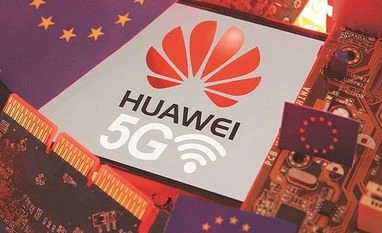
France will authorise the use of some of Huawei’s equipment in the rollout of its 5G network, two sources close to the matter told Reuters, despite US calls to exclude the Chinese telecoms giant from the West’s next-generation communications.
The French cybersecurity agency, ANSSI, is due to tell telecoms operators which equipment they are allowed to use for the deployment of their 5G network in France, but has not made public any decision.
The two sources, who spoke on condition of anonymity, said ANSSI had decided to approve the use of Huawei gear, but only for what they described as non-core parts of the network, as these pose less significant security risks.“They don’t want to ban Huawei, but the principle is: ‘Get them out of the core mobile network’,” one of the two sources said.
A spokeswoman for ANSSI declined to comment.
Core mobile networks carry higher surveillance risks because they incorporate more sophisticated software programs that process sensitive information such as customers’ personal data.
French authorities’ decision over Huawei’s equipment is crucial for two of the country’s four telecoms operators, Bouygues Telecom and Altice Europe’s SFR, as about half of their current mobile network is made by the Chinese group.
State-controlled Orange, has already chosen Huawei’s European rivals, Nokia and Ericsson, which U.S. operates have favored over Huawei.
Up to now, sources close to the French telecoms industry have said they fear Huawei will be barred in practice even if no formal ban is announced.
By granting a partial authorisation to Huawei, France would follow Britain’s footsteps, as British Prime Minister Boris Johnson granted Huawei a limited role in the country’s 5G network.
Neighboring Germany is also struggling to reach consensus on the way forward. Chancellor Angela Merkel’s ruling conservatives back tougher rules on foreign vendors but have stopped short of an outright ban on Huawei.
France is likely to follow instructions given by European Union’s industry chief Thierry Breton, who said in interviews that telecoms operators should not select “risky vendors” for strategic sites such as capital cities, military bases and nuclear plants, a separate telecoms industry source said.
Without ever citing Shenzhen-based Huawei, Breton has said a “risky vendor” was a company that heavily relies on a foreign state or a state that could compel it to disclose clients’ data.
ANSSI was initially due to give the first results of the screening of the 5G telecoms gear about a month ago.
The cybersecurity agency’s decision was delayed because it asked operators additional questions in December, the same telecoms source said.
But it also has had intense exchanges with its overseeing authority, France’s prime minister office, as well as its British and German peers, to find a common approach toward Huawei, one of the two sources close to the matter said.
The Chinese group said last month that it planned to build its first European manufacturing plant in France as it seeks to ease concerns stoked by U.S. charges that Beijing could use its equipment for spying — which it denies.
Read this article for free
Register to continue reading premium journalism and analysis from Business Standard.

 "France to allow some Huawei's equipment in its 5G network: Report")











