Gita Gopinath is great choice for IMF Chief Economist: Mohamed A El-Erian

Harvard's Gita Gopinath will bring fresh thinking to challenges of productivity, debt, capital flows and exchange-rate systems
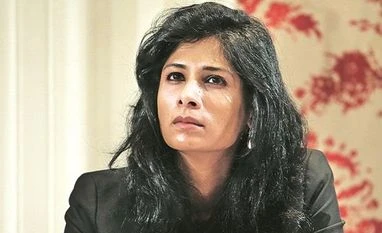
Gita Gopinath, IMF chief economist, gopinath, CG
Gita Gopinath
Mohamed A El-Erian | Bloomberg
Last Updated : Oct 02 2018 | 12:49 PM IST
Having followed Gita Gopinath’s work closely for several years, I am delighted the International Monetary Fund appointed her to head its influential research department as chief economist.

Gopinath, a professor of International Studies and Economics at Harvard University and co-director of the International Finance and Macroeconomics program at the National Bureau of Economic Research, brings expertise, insights and cognitive diversity to the IMF. Her appointment comes at an important time, as the fund seeks to evolve its thinking and practices to better reflect realities on the ground, particularly the two-way causal relationship between macroeconomic and financial issues.

Trade, productivity, debt, capital flows and the functioning of exchange-rate systems are among the top puzzles and challenges facing the global economy as a whole. If the IMF were to survey its 189 member countries, these questions would also be among the top issues that national policy makers confront in formulating strategies for their countries.
As I argued last week,these concerns reflect what London Business School’s Hélène Rey and others have called ‘the global factor’: a set of external influences that countries cannot manage or control, but that play an important role in determining key domestic variables. This has generated economic and financial volatility that has complicated internal policy management, fueled political polarization, and exacerbated social divisions.
 
These topics have also featured prominently in Gopinath’s research and publications, which have tended to challenge conventional wisdom and push the collective thinking forward in a beneficial way. Her work has been recognized with many impressive appointments and accolades, including co-editor of the American Economic Review, being named four years ago among the top 25 economists under the age of 45, and serving on several Federal Reserve advisory councils.

For all these reasons, I have little doubt that Gopinath has the potential to bring dynamic new thinking to the Fund. Also, she joins a group of IMF directors that will benefit from greater diversity. She is the first woman appointed to head the research department, which produces the fund’s regular flagship publication, the World Economic Outlook, and is one of the most read documents released by multilateral institutions, not only because of its analyses of the developments and prospects for the global economy but also for the special topics that are addressed in depth.

(Full disclosure: I served in several posts at the IMF, including deputy director, from 1983 to 1997, and have been on several of its advisory groups since then.)

There is no question about the strong professional attributes that Gopinath will bring to the challenge of enhancing the work and impact of the IMF. It remains to be seen whether the fund will be able to incorporate her thinking in a range of areas, including better coverage of the linkages between finance, market technical volatility, and spillovers for the real economy; enhancing early warning analyses; increasing the resilience to market instability of individual country programs; and developing a wider toolkit for dealing with overshoots in capital flows, both feast and famine. This will require open-mindedness, intellectual agility and a willingness to revisit some longstanding conventional wisdom.

With its quasi-universal membership, comprehensive mission statement, and talented staff, the IMF is the best of the global multilateral institutions that offer guidance on macroeconomic and financial issues. Gopinath’s appointment enhances the possibility that the fund can have a more effective and influential role to the benefit of both the global economy and individual countries.


One subscription. Two world-class reads.

Already subscribed? Log in

Subscribe to read the full story →
*Subscribe to Business Standard digital and get complimentary access to The New York Times

Smart Quarterly

₹900

3 Months

₹300/Month

SAVE 25%

Smart Essential

₹2,700

1 Year

₹225/Month

SAVE 46%
*Complimentary New York Times access for the 2nd year will be given after 12 months

Super Saver

₹3,900

2 Years

₹162/Month

Subscribe

Renews automatically, cancel anytime

Here’s what’s included in our digital subscription plans

Exclusive premium stories online

  • Over 30 premium stories daily, handpicked by our editors

Complimentary Access to The New York Times

  • News, Games, Cooking, Audio, Wirecutter & The Athletic

Business Standard Epaper

  • Digital replica of our daily newspaper — with options to read, save, and share

Curated Newsletters

  • Insights on markets, finance, politics, tech, and more delivered to your inbox

Market Analysis & Investment Insights

  • In-depth market analysis & insights with access to The Smart Investor

Archives

  • Repository of articles and publications dating back to 1997

Ad-free Reading

  • Uninterrupted reading experience with no advertisements

Seamless Access Across All Devices

  • Access Business Standard across devices — mobile, tablet, or PC, via web or app

Next Story


