
Global warming speeding up world's water cycle, say researchers
This is leading to more extreme weather conditions with the world's wetter areas becoming even more soaked and the dry regions becoming even more parched: Report
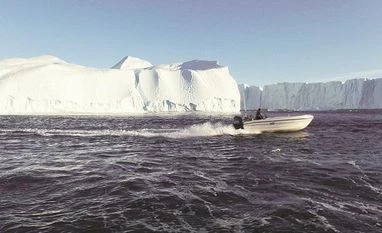 "Global warming speeding up world's water cycle, say researchers")
WebinarsNew
Deep DiveNew
Explore Business Standard
This is leading to more extreme weather conditions with the world's wetter areas becoming even more soaked and the dry regions becoming even more parched: Report
Rising temperatures are accelerating the world's water cycle and triggering natural disasters such as droughts and floods, according to a new report led by Australian researchers.
The report, published in Nature journal, released to the public on Thursday, said that the hotter temperatures are speeding up the constant cycle of freshwater between the clouds, the land and the ocean, leading to more extreme weather conditions with the world's wetter areas becoming even more soaked and the dry regions becoming even more parched.
Taimoor Sohail, the lead author and a mathematician from the University of New South Wales (UNSW), said the findings "paint a picture of the larger changes happening in the global water cycle," Xinhua news agency reported.
Previously, changes to the cycle had been difficult to directly observe, as about 80 per cent of global rainfall and evaporation occurs over the ocean.
Sohail said his team had instead analysed historical data from 1970 to 2014 to monitor the changing patterns of salt in the ocean, to estimate how much ocean freshwater had moved from the equator to the poles during that time.
Their new findings showed that between two and four times more freshwater had moved than climate models had anticipated.
The researchers believe the amount of freshwater that was transported from the equator to the poles during those years had exceeded predictions by up to 77,000 cubic km.
"We already knew the global water cycle was intensifying," Sohail said. "We just didn't know by how much."
Jan Zika, co-author of the report and associate professor of UNSW School of Mathematics and Statistics, said evaporation in warmer regions removed freshwater from the oceans making those bodies of water saltier.
In contrast, Zika said the "water cycle takes that freshwater to colder regions where it falls as rain, diluting the ocean and making it less salty."
"Changes to the water cycle can have a critical impact on infrastructure, agriculture, and biodiversity," Sohail said. "It's therefore important to understand the way climate change is impacting the water cycle now and into the future.
"Establishing the change in warm-to-cold freshwater transport means we can move forward and continue to make these important projections about how climate change is likely to impact our global water cycle," Sohail said.
--IANS
int/sks/dpb
(Only the headline and picture of this report may have been reworked by the Business Standard staff; the rest of the content is auto-generated from a syndicated feed.)
First Published: Feb 24 2022 | 10:41 AM IST


 Connect with us on WhatsApp