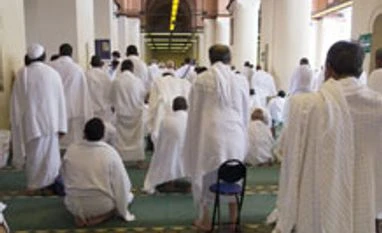
For the two million Muslims from across the world performing the haj in Saudi Arabia this year, the annual pilgrimage is a time to forget the differences in race, sect, wealth and even nationality that divide believers and focus instead on their equality before God.
But when tragedy strikes, as with the massive human crush that killed more than 700 pilgrims near a holy site on Thursday, those differences come rushing back to the surface.
A Saudi official blamed the tragedy on African pilgrims, prompting accusations of racism. Iran fired up its state apparatus to lambast Saudi Arabia, its sectarian and regional rival, over its crowd management. And some questioned Saudi Arabia's right to solely oversee sites of pre-eminent importance to the world's nearly 1.6 billion Muslims.
The fact that such schisms can so swiftly cloud a mass rite meant to emphasise Muslim unity disappoints many who wish for greater international cooperation.
"Haj is the great unifier," said Khaled Almaeena, a Saudi writer and editor who has taken part in the rite many times. "But it is unfortunate that you can't use the haj for a greater good, because the concept of haj in Islam is to get people together."
Worldly divisions often intrude, even though all the pilgrims wear simple, white gowns meant to promote the sense of equality, and the theological rifts that divide Shiites, Sunnis and other sects are easily set aside in Mecca since all perform the same rituals.
"You could be an Arab prince, you could be a South Asian construction worker, you could be an Afghan warlord and you are all wearing the same clothes and you just walk through this barren landscape and it is miserably hot," said Basharat Peer, an Indian journalist who has written about Mecca and the haj.
"But when you look a little more carefully," he added, "what you see is that even during the haj, the distinctions of wealth and class do not disappear."
Many have criticised the Saudi authorities' development of the sites, replacing nearby mountains with luxury hotels where wealthy Muslims can pay huge sums for hotel rooms with a view of the Kaaba, the black structure in the middle of the Grand Mosque toward which Muslims pray.

 "Haj tragedy: Schisms emerge in a pilgrimage designed for unity")


 Connect with us on WhatsApp