India's strategic choices: Modi, Xi and changing balance of power in Asia

The asymmetry of power and influence between the two Asian giants has rarely been so stark, especially in India's backyard
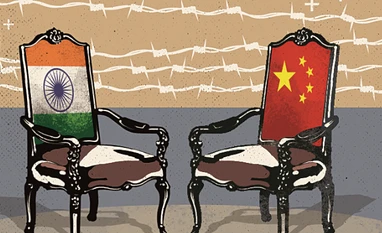
India-China
Illustration by Ajay Mohanty
Mihir Sharma | Bloomberg
4 min read Last Updated : Nov 29 2019 | 10:40 AM IST
The leaders of China and India meet in the city of Wuhan this week for an unusual summit. India’s prime minister and China’s president won’t have aides in the room; there will be no written notes and no joint statement afterwards. There will be, we are told, no agenda.

In fact, there is an agenda - a sobering one for anyone counting on India to serve as a “counterweight” to China. Prime Minister Narendra Modi’s main goal for the summit is to get China to stop kicking sand in India’s face. The last thing he can afford as his country approaches general elections next year is another confrontation similar to the India-China faceoff in the Himalayas last year. Any such dust-up would likely end in politically disastrous humiliation for India.

QuicktakeIndia’s Aspirations

The tough words that accompanied last year's standoff are no longer heard in the halls of power in New Delhi. Indian officials have muted criticism of China's Belt and Road Initiative, although they still refuse to sign onto the plan. They've essentially entered the shadow trade war between the US and China on China's side, offering to export more soybeans to keep up supply if the Chinese government does impose tariffs on US agricultural products. China's shown few signs of reciprocating these concessions.  

Most embarrassingly for those of us who like to trumpet democratic India’s commitment to liberal values, the government's top bureaucrat wrote to his peers in February warning them it was a “sensitive time” for bilateral relations and “advising” them to stay away from any function commemorating the 60th anniversary of the Dalai Lama’s arrival in India as a refugee from Chinese persecution. The decision was made just as India’s foreign secretary travelled to Beijing to lay the groundwork for this week's summit.

Some might welcome India's new posture as plain realism. The asymmetry of power and influence between the two Asian giants has rarely been so stark, especially in India’s backyard. Earlier this year, the Maldives -- once closely tied to India -- theatrically shifted allegiance to China and to an authoritarian political model that isolated the country's India-friendly democrats. India found it had few political levers in Male and even fewer economic incentives to offer. Most mortifyingly for a country accustomed to thinking of the Indian Ocean as its private lake, at the height of the crisis China sent a naval group into the region for the first time in four years. 

Indian policymakers are now faced with a dilemma. On the one hand, they have few resources with which to challenge China. But, if they step back, they are surrendering to a familiar Chinese strategy: a multi-layered effort to force other regional powers to abandon their spheres of influence. India’s neighbors have long been targets for China's affections. As Aparna Pande of the Hudson Institute points out, for decades 60 percent of China’s arms exports have gone to Pakistan, Bangladesh and Myanmar.

For India's partners across the world, the Modi government’s pursuit of a “reset” with China should be a warning that the South Asian giant isn't anywhere near ready to counter China's rise. Indian policymakers meanwhile must pragmatically evaluate the benefits and costs of placating China. Have similar efforts in the past by Japan or the U.S. paid off? If not, is there another option?

Many would argue there is. India has long cherished what it calls its “strategic autonomy," seeking to maintain a Jeffersonian distance from “entangling alliances." Yet that lofty disregard of global rivalries is unaffordable when an aspiring hegemon can so easily pick off your neighbors one by one.

Rather than seeking to appease China, India’s interests would be better served to seek to repair and strengthen its relationships -- economic and political -- with democracies in Asia and beyond that share its interests and values. As the U.S. quickly discovered when establishing its own network of postwar alliances, power depends on having the right friends. 

One subscription. Two world-class reads.

Already subscribed? Log in

Subscribe to read the full story →
*Subscribe to Business Standard digital and get complimentary access to The New York Times

Smart Quarterly

₹900

3 Months

₹300/Month

SAVE 25%

Smart Essential

₹2,700

1 Year

₹225/Month

SAVE 46%
*Complimentary New York Times access for the 2nd year will be given after 12 months

Super Saver

₹3,900

2 Years

₹162/Month

Subscribe

Renews automatically, cancel anytime

Here’s what’s included in our digital subscription plans

Exclusive premium stories online

  • Over 30 premium stories daily, handpicked by our editors

Complimentary Access to The New York Times

  • News, Games, Cooking, Audio, Wirecutter & The Athletic

Business Standard Epaper

  • Digital replica of our daily newspaper — with options to read, save, and share

Curated Newsletters

  • Insights on markets, finance, politics, tech, and more delivered to your inbox

Market Analysis & Investment Insights

  • In-depth market analysis & insights with access to The Smart Investor

Archives

  • Repository of articles and publications dating back to 1997

Ad-free Reading

  • Uninterrupted reading experience with no advertisements

Seamless Access Across All Devices

  • Access Business Standard across devices — mobile, tablet, or PC, via web or app

Topics :Xi Jinping

Next Story


