Investors seek refuge in China as Fed, inflation roil other markets

Major central banks are preparing to withdraw the excess stimulus measures of the past couple of years.
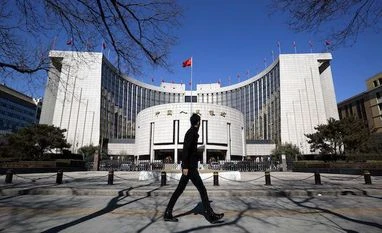
China central bank, People's Bank of China
Photo: Bloomberg
Reuters Shanghai
4 min read Last Updated : Jan 26 2022 | 11:59 AM IST
Foreign investors are piling into China at the start of 2022, seeing it as a haven from the inflation, growth and pandemic problems plaguing most other markets. Despite seeing returns last year eroded by Beijing's regulatory and policy purge, global fund managers are pumping money into mainland equities and bonds, betting China's stability pledges, monetary and fiscal easing and subdued inflation could shield them against volatility in other markets.

That's in stark contrast to conditions elsewhere. Major central banks are preparing to withdraw the excess stimulus measures of the past couple of years, and the Federal Reserve is hastening monetary tightening to tame runaway inflation, potentially undermining stock values and earnings. 

For David Dali, head of portfolio strategy at Matthews Asia, China is the "single favourite country" in 2022 among the roughly 30 investible emerging equity markets. "We believe Chinese valuations are some of the least risky and most attractive of all major markets," Dali said. He cited factors including lesser regulatory headwinds, government readiness to stimulate the economy, and a political mandate to maintain stability in a year widely expected to confirm President Xi Jinping's unprecedented third term.

Fidelity International also sees China stocks as attractive from a global perspective. "China's policy shift is very clear. And recent data offers signs that the economy has stabilised," Fidelity's Shanghai-based fund manager Zhou Wenqun said.

Evidence of that bullishness is in foreign net inflows into Chinese stocks via the Stock Connect scheme, which hit a record-high daily average of $413 million during the first three weeks of 2022, according to Morgan Stanley. Flows were strong in 2021, with a record $67 billion invested through the Connect channel in onshore equities. But the mainland blue-chip index lost 5.2%, in contrast to a near 27% rise in the U.S. S&P 500 and double-digit gains in most European indices.

Bond investors, too, are drawn toward China, against the backdrop of a widening Sino-U.S. monetary policy divergence. Bond markets typically perform badly in a rate hike cycle, but in China, "we see that the monetary policy easing cycle is only at the start," said Paula Chan, senior portfolio manager at Manulife Investment Management, who expects more rate cuts. China's "inflation concern is not as alarming as in other countries", and its bonds are a good hedge, she said.

Robust foreign inflows have helped push the Chinese yuan to its highest level against the dollar in nearly four years this week, despite a slew of cuts in key interest rates to support the economy. In contrast, foreign money inflows into emerging markets outside China has "come to an abrupt standstill", the Institute of International Finance (IIF) said. In December, emerging markets (EM) outside China suffered an outflow of $9.6 billion, compared with an inflow of $10.1 billion for China. Chinese equities saw an inflow of $12.5 billion, contributing to most of the EM inflows.

For non-China EM, "We believe that the outlook is worsened by the Omicron variant and expectations of a stronger dollar and higher U.S. interest rates," IIF said, in its latest capital flows tracker report. "Markets see China rebounding more quickly than other EMs."

Foreign buying at the start of the year was concentrated in banking, materials and capital goods sectors, according to Morgan Stanley, which noted top stocks included China Merchants Bank, NARI Technology and Ping An Insurance Group.

UBS Securities said both foreign investors and domestic mutual funds had allocated to what they deem are hot themes, such as new energy and manufacturing.

(Reporting by Samuel Shen and Andrew Galbraith Editing by Vidya Ranganathan and Lincoln Feast)

One subscription. Two world-class reads.

Already subscribed? Log in

Subscribe to read the full story →
*Subscribe to Business Standard digital and get complimentary access to The New York Times

Smart Quarterly

₹900

3 Months

₹300/Month

SAVE 25%

Smart Essential

₹2,700

1 Year

₹225/Month

SAVE 46%
*Complimentary New York Times access for the 2nd year will be given after 12 months

Super Saver

₹3,900

2 Years

₹162/Month

Subscribe

Renews automatically, cancel anytime

Here’s what’s included in our digital subscription plans

Exclusive premium stories online

  • Over 30 premium stories daily, handpicked by our editors

Complimentary Access to The New York Times

  • News, Games, Cooking, Audio, Wirecutter & The Athletic

Business Standard Epaper

  • Digital replica of our daily newspaper — with options to read, save, and share

Curated Newsletters

  • Insights on markets, finance, politics, tech, and more delivered to your inbox

Market Analysis & Investment Insights

  • In-depth market analysis & insights with access to The Smart Investor

Archives

  • Repository of articles and publications dating back to 1997

Ad-free Reading

  • Uninterrupted reading experience with no advertisements

Seamless Access Across All Devices

  • Access Business Standard across devices — mobile, tablet, or PC, via web or app

Topics :China economyUS InflationFederal Reserve

Next Story



