
Japan current account surplus doubles; GDP revised up
Biggest rise in bank lending in over three years, in a fresh sign the govt's policies to stimulate growth are paying off
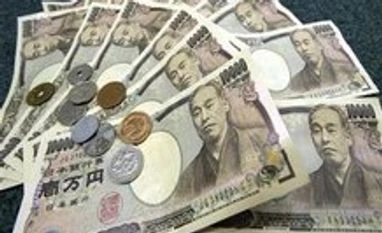 "Japan current account surplus doubles; GDP revised up")
WebinarsNew
Deep DiveNew
Explore Business Standard
Biggest rise in bank lending in over three years, in a fresh sign the govt's policies to stimulate growth are paying off
Separate data showed the world's third-biggest economy grew 1.0 percent in the first quarter, revised up slightly from a preliminary estimate, underscoring a steady recovery driven by a pickup in global growth and sweeping stimulus policies by Prime Minister Shinzo Abe.
The current account surplus stood at 750 billion yen, up 100.8 percent from a year earlier and much bigger than a median market forecast of a 320 billion yen surplus, data from the Ministry of Finance showed on Monday.
Hefty income gains including returns from Japanese investments abroad, which were boosted by a weak yen, more than made up for trade deficits, analysts say.
"There isn't much change in the trade balance trend, where the weak yen is boosting import costs," said Junko Nishioka, chief economist at RBS Securities Japan.
"Exports are gradually recovering as overseas growth picks up, so that's a positive sign. But the growth in exports isn't strong enough to offset the rising import costs."
The latest data comes as volatile markets are casting a cloud over 'Abenomics', a policy prescription of sweeping monetary and fiscal expansion aimed at ending years of entrenched deflation and economic stagnation.
Japanese equities have suffered big falls since May 23, with investors worrying over a slowdown in China and uncertainty on when the US Federal Reserve would roll back its stimulus.
The effects of a weak yen have had a bigger impact on boosting the cost of imports than driving export growth, posing a challenge to Abe's ambitious goal of putting Japan on a sustainable long-term growth track.
However, there are encouraging signals for the economy.
Bank lending rose 1.8 percent in May from a year earlier, the biggest annual increase since August 2009, in a sign the Bank of Japan's ultra-loose monetary policy is prompting companies to spend more.
For decades, Japan had accumulated solid current account surpluses, but the surplus for 2012 more than halved from a year before to 4.7 trillion yen, the smallest on record.
Separate data from the Cabinet Office showed Japan's economy grew 1.0 percent in January-March from the previous quarter, revised up from an initial estimate of a 0.9 percent gain due to revision to corporate capital spending.
Abe's growth strategy unveiled last week - 'the third arrow' of his three-pronged policies aimed at stimulating the Japanese economy - has so far failed to impress investors who want the prime minister to tackle bolder reforms including corporate tax cuts and higher labour mobility.
First Published: Jun 10 2013 | 9:22 AM IST


 Connect with us on WhatsApp