
Japan's yen weakens past 150 per dollar for first time since August 1990
The fragile yen briefly weakened past 150 per dollar in early European trading for the first time since August 1990. It was last trading flat a little below that level
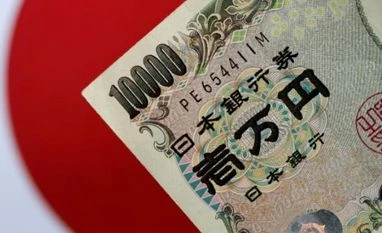 "Japan's yen weakens past 150 per dollar for first time since August 1990")
WebinarsNew
Deep DiveNew
Explore Business Standard
The fragile yen briefly weakened past 150 per dollar in early European trading for the first time since August 1990. It was last trading flat a little below that level
The dollar hit the symbolic level of 150 yen on Thursday as the greenback was supported by Treasury yields trading at multi-year highs, keeping markets on high alert for any signs of an intervention from Japanese authorities.
Moves among other majors were more muted with the euro at $0.97835 and sterling at $1.1217, both failing to regain ground on the dollar, after tumbling the day before.
The fragile yen briefly weakened past 150 per dollar in early European trading for the first time since August 1990. It was last trading flat a little below that level.
It has been on a losing streak for 11 straight sessions as of Wednesday's close, and has renewed 32-year lows for six sessions now.
"It's a big psychological level that could trigger intervention … people have been anticipating intervention for a while," said Sim Moh Siong, currency strategist at Bank of Singapore.
"People are going to look over their shoulders for a while and see whether there's any action or not, if not, they're going to push it further, higher. That's how the market goes. The next resistance I see would be around 153 level."
Last month, Japan intervened in the foreign exchange market to buy yen for the first time since 1998 in an attempt to shore up the battered currency.
The Japanese currency has been weakening as the country's central bank has been intervening in markets to keep Japanese benchmark yields pinned near zero, at a time when those elsewhere are rising.
The benchmark U.S. 10-year Treasury yield rose to 4.18% on Thursday, its highest level since mid-2008, while the two-year Treasury yields touched a 15-year high of 4.6079%. [US/]
U.S. yields have been driven higher as the Federal Reserve looks set to continue with its aggressive pace of interest rate hikes.
Overnight, Fed officials also continued their hawkish rhetoric, as Federal Reserve Bank of Minneapolis President Neel Kashkari said that U.S. job market demand remains strong and underlying inflation pressures probably have not peaked yet.
The euro climbed a whisker on the pound but the British currency largely ignored the latest political turmoil in the United Kingdom, with the departure of the interior minister being the latest matter to add to the uncertainty.
The surging greenback also pushed the Chinese offshore yuan to a record low in Asia of 7.2794 early in the session, its weakest level since such data first became available in 2011.
It later trimmed intraday losses on a Bloomberg report China is considering a cut in the duration of quarantine for inbound visitors from 10 days to seven days.
(Reporting by Rae Wee and Alun John; Editing by Stephen Coates and Angus MacSwan)
(Only the headline and picture of this report may have been reworked by the Business Standard staff; the rest of the content is auto-generated from a syndicated feed.)
First Published: Oct 20 2022 | 3:38 PM IST


 Connect with us on WhatsApp