Made in Iran thrives in economy Trump tried to cripple with sanctions

Small firms are filling the vacuum for consumer goods as Iranians struggle to buy foreign brands
Iran economy
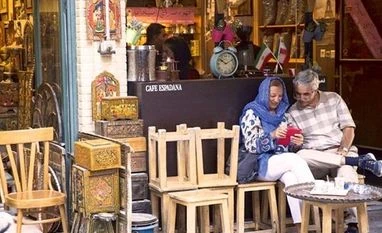
A combination of the sudden crash in the value of the rial, a huge hit to consumer spending power, and a government ban on hundreds of non-essential goods ripped through the retail industry | Photo: Bloomberg
Golnar Motevalli | Bloomberg
3 min read Last Updated : Oct 19 2020 | 10:03 PM IST
There can’t have been many worse times to start a new business in Iran. Even before officials in the Islamic Republic alerted the public to a major outbreak of the coronavirus, the country started the year in a tense stand-off with the US while its economy was being crippled by sanctions.
 
For a trio of design graduates, a captive market of tens of millions of consumers starved of imports made it worth the risk. Their fashion brand, Koi, has sold thousands of crop tops and striped jeans since July.
 
‘Made in Iran’ has emerged a rare glimmer of hope amid the financial destruction owing to ostracisation from the oil market and global trade, in the midst of the outbreak.
 
In a country where so many people’s lives have been defined by cycles of Western restrictions, brands like Koi, Zi Shampoo and Bonmano Coffee are among the homespun names that are filling the vacuum for consumer goods. 
 
“We just knew it would work because we ourselves and so many people around us were so desperate for basic, simple things,” said Armita Ghasabi, 30, one of Koi’s founders.
 
Koi uses fabric spun at a textile mill in Iran’s northwestern city of Khoy, eliminating the need for imported materials. A dearth of competition from global brands and low labour costs keep prices affordable and their margins healthy, according to Ghasabi.

For every $18 pair of jeans, they make the local currency equivalent of $11 of profit to spend on new product lines. 
 
Iran for years has prided itself on resilience, something that Supreme Leader Ayatollah Ali Khamenei has tried to expand on and enshrine in policy with his “resistance economy” doctrine. The 2015 accord on reducing its nuclear enrichment promised to bring the nation back into the international fold before President Donald Trump abandoned the deal and started his assault on Iran’s economy. One of the first things to disappear from Tehran’s streets after sanctions were re-imposed in 2018 were clothing shops.
 
Popular shopping hubs that had for years hosted unofficial versions of Mango and Zara or franchises for Adidas and Benetton are now dominated by empty retail units.
 
A combination of the sudden crash in the value of the rial, a huge hit to consumer spending power and a government ban on hundreds of non-essential goods, including garments, ripped through the retail industry. Fewer imports led to a scarcity of mundane things like foreign shampoo brands, which have skyrocketed in price.
 
Nazanin, who co-owns a small marketing firm in Tehran and didn’t want to give her surname because of sensitivity of speaking with foreign media, said she’s started buying Zi shampoo because she can’t afford L’Oreal’s Elvive brand anymore. When she can find one, a bottle is six times more expensive in local currency compared with two years ago. “The quality is pretty much the same,” said the 51-year old.
 
Iranian officials have been told to expand the private sector and export to nearby countries. But the biggest of Iran’s indigenous manufacturing industries, such as carmakers, are still highly sensitive to sanctions and are plagued by corruption. Many smaller companies are doing better, even as gross domestic product contracted 12 per cent since 2018.
 
For sure, Iran’s economy remains in deep trouble. The daily death toll from Covid-19, meanwhile, rose to a record this week. Travel restrictions were imposed on five cities, including the capital, Tehran.
 
Many essential goods that are made in Iran are still rising dramatically in price, because they partially rely on imports.

One subscription. Two world-class reads.

Already subscribed? Log in

Subscribe to read the full story →
*Subscribe to Business Standard digital and get complimentary access to The New York Times

Smart Quarterly

₹900

3 Months

₹300/Month

SAVE 25%

Smart Essential

₹2,700

1 Year

₹225/Month

SAVE 46%
*Complimentary New York Times access for the 2nd year will be given after 12 months

Super Saver

₹3,900

2 Years

₹162/Month

Subscribe

Renews automatically, cancel anytime

Here’s what’s included in our digital subscription plans

Exclusive premium stories online

  • Over 30 premium stories daily, handpicked by our editors

Complimentary Access to The New York Times

  • News, Games, Cooking, Audio, Wirecutter & The Athletic

Business Standard Epaper

  • Digital replica of our daily newspaper — with options to read, save, and share

Curated Newsletters

  • Insights on markets, finance, politics, tech, and more delivered to your inbox

Market Analysis & Investment Insights

  • In-depth market analysis & insights with access to The Smart Investor

Archives

  • Repository of articles and publications dating back to 1997

Ad-free Reading

  • Uninterrupted reading experience with no advertisements

Seamless Access Across All Devices

  • Access Business Standard across devices — mobile, tablet, or PC, via web or app

Topics :IranNew US sanctions on TehranUS sanctions

Next Story



