The number of Chinese registered as suffering from depression, anxiety, alcohol abuse, dementia, and other mental illnesses increased 25 percent between 2014 and 2016, according to Chinese authorities. By one recent accounting, they number 173 million. Only 20 million receive professional treatment.
Long-standing social stigmas and a lack of treatment options account for most of the gap. But those biases and institutional weaknesses are starting to break down. This week, Wenzhou Kangning Hospital, a chain of psychiatric hospitals, announced that it’s seeking a $29.5 million initial public offering on China's A-share market — making it the first mental-health-focused business to be listed in mainland China. It won’t be 2018’s flashiest or most lucrative IPO. But in terms of social significance, its value can’t be underestimated. The need is acute. Four decades of economic development have improved living standards while fraying social ties and creating new social pressures. A once-rural society held together by extended families is now an urban one in which single children compete fiercely from preschool onward. Depression and anxiety are increasingly common among the young, while dementia increases among China’s growing ranks of elderly.
The failure to treat sufferers is as much a cultural problem as an institutional one. In China, those who suffer from mental illness are shunned. Families and individuals will often hide mental illness for fear of alienating friends, colleagues and potential spouses.
There’s a political dimension, as well. In the 1960s, Mao Zedong outlawed the practice of psychiatry (he viewed it as bourgeois) and closed psychiatric hospitals, most of which were founded by foreign missionaries. The public hospitals have since reopened, but they’re often used to incarcerate political dissidents. With the public sector failing to meet needs, China’s rapidly expanding private hospitals, which already account for 57.2 percent of all hospitals in China, are stepping up. Wenzhou Kangning is the biggest chain focusing on mental health. Founded in 1996, it operates eight hospitals and nearly 2,600 beds on China’s affluent east coast, where its outpatient practice is primarily focused on young, white collar workers . The company claims that profit margins have exceeded 38 percent since 2014.
Read this article for free
Register to continue reading premium journalism and analysis from Business Standard.

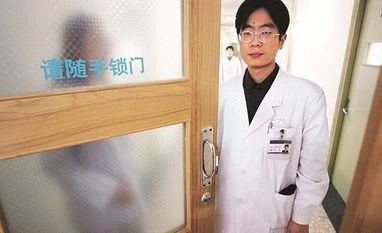 "Mental-health IPO is a leap forward for China")












 Connect with us on WhatsApp