More than 50 killed in Benghazi, Tripoli clashes
US, United Nations and Turkey pull diplomats out of the North African country
Reuters Benghazi At least 36 people were killed in Libya's eastern city of Benghazi, many of them civilians, in clashes between Libyan Special Forces and Islamist militants on Saturday night and Sunday morning, medical and security sources said.
Another 23 people, all Egyptian workers, were killed in the capital Tripoli when a rocket hit their home on Saturday during clashes between rival militias battling over the city's main airport, the Egyptian state news agency reported.
In the last two weeks, Libya has descended into its deadliest violence since the 2011 war that ousted Muammar Gaddafi, prompting the United States, the United Nations and Turkey to pull diplomats out of the North African country.
With the central government unable to impose order, two rival militias are exchanging rocket and artillery fire in Tripoli, while army units are trying to push out Islamist militants who have set up camps on the outskirts of Benghazi.
The United States evacuated its embassy in Libya on Saturday, driving diplomats across the border into Tunisia under heavy military protection after escalating clashes broke out near the embassy compound in Tripoli.
Early on Sunday, sporadic shelling continued in Tripoli though far less than in the previous days. There were no immediate reports of any casualties.
But clashes were far heavier in Benghazi overnight, where regular army and air force units have joined with a renegade ex-army general who has launched a self-declared campaign to oust Islamist militants from the city.
A source from the Special forces fighting Islamist militants in Benghazi told Reuters clashes involved warplanes hitting militant positions belonging to Ansar al Sharia and another group in the city.
A medical source said 36 people were killed, many of them civilians, and another 65 wounded during clashes on that lasted into the night. Dozens of families have been evacuated from the area between the two sides to escape the fighting.
Libya's western allies worry the OPEC country is becoming polarised between the two main factions of competing militia brigades and their political allies, whose battle is shaping the country's transition.
Special envoys for Libya from the Arab League, the United States and European countries expressed their concerns about the situation in Libya, saying it had reached a "critical stage" and called for an immediate ceasefire. "The UN should play a leading role in reaching a ceasefire in conjunction with the Libyan government and other internal partners, with the full support of the international envoys," a statement issued after a meeting in Brussels said.
A new Libyan parliament was elected in June and western governments hope warring parties may be able to reach a political agreement when the lawmakers meet in August for the first session.
But three years after Gaddafi's demise, Libya's transition to democracy has been delayed by political infighting and militia violence. Armed groups have also targeted the oil industry to pressure the state.

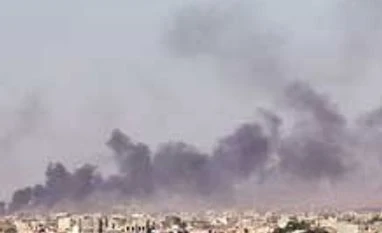 "More than 50 killed in Benghazi, Tripoli clashes")


 Connect with us on WhatsApp