
Much of China's Shanghai locked down as mass Covid-19 testing begins
China began locking down most of its largest city of Shanghai on Monday as part of its strict Covid-19 strategy, amid questions over the policy's economic toll on the country.
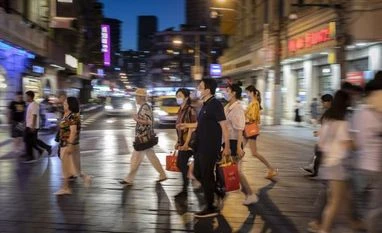 "Much of China's Shanghai locked down as mass Covid-19 testing begins")
WebinarsNew
Deep DiveNew
Explore Business Standard
China began locking down most of its largest city of Shanghai on Monday as part of its strict Covid-19 strategy, amid questions over the policy's economic toll on the country.
China began locking down most of its largest city of Shanghai on Monday as part of its strict COVID-19 strategy, amid questions over the policy's economic toll on the country.
Shanghai's Pudong financial district and nearby areas will be locked down from early Monday to Friday as citywide mass testing gets underway, the local government said.
In the second phase of the lockdown, the vast downtown area west of the Huangpu River that divides the city will then start its own five-day lockdown Friday.
Residents will be required to stay home and deliveries will be left at checkpoints to ensure there is no contact with the outside world.
Offices and all businesses not considered essential will be closed and public transport suspended.
Already, many communities within the city of 26 million have been locked down, with their residents required to submit to multiple tests for COVID-19.
And Shanghai's Disney theme park is among the businesses that closed earlier.
China has reported more than 56,000 infections nationwide this month, with a surging outbreak in the northeastern province of Jilin accounting for most of them. Shanghai has had relatively few of those cases, with just 47 recorded Saturday.
But in response to China's biggest outbreak in two years, Beijing has continued to enforce what it calls the dynamic zero-COVID" approach, calling that the most economical and effective prevention strategy against COVID-19.
That requires lockdowns and mass testing, with close contacts often being quarantined at home or in a central government facility. The strategy focuses on eradicating community transmission of the virus as quickly as possible, sometimes by locking down entire cities.
While officials, including Communist Party leader Xi Jinping have encouraged more targeted measures, local officials tend to take a more extreme approach, concerned with being fired or otherwise punished over accusations of failing to prevent outbreaks.
While China's vaccination rate stands at around 87 per cent, it is considerably lower among older people.
National data released earlier this month showed that over 52 million people aged 60 and older have yet to be vaccinated with any COVID-19 vaccine. Booster rates are also low, with only 56.4 per cent of people between 60-69 having received a booster shot, and 48.4 per cent of people between 70-79 having received one.
(Only the headline and picture of this report may have been reworked by the Business Standard staff; the rest of the content is auto-generated from a syndicated feed.)
First Published: Mar 28 2022 | 8:43 AM IST


 Connect with us on WhatsApp