
New Covid-like virus in bats could infect humans, resist vaccines: Study
A new SARS-CoV-2-like virus discovered in Russian bats is capable of infecting humans, and is resistant to current vaccines against COVID-19, a study has found.
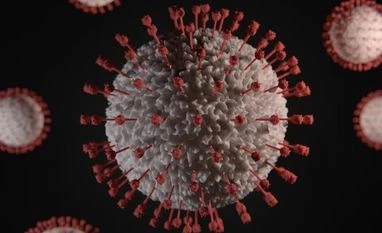 "New Covid-like virus in bats could infect humans, resist vaccines: Study")
WebinarsNew
Deep DiveNew
Explore Business Standard
A new SARS-CoV-2-like virus discovered in Russian bats is capable of infecting humans, and is resistant to current vaccines against COVID-19, a study has found.
A new SARS-CoV-2-like virus discovered in Russian bats is capable of infecting humans, and is resistant to current vaccines against COVID-19, a study has found.
A team lead by researchers at Washington State University (WSU), US, found spike proteins from the bat virus, named Khosta-2, can infect human cells and is resistant to both the antibody therapies and blood serum from people vaccinated for SARS-CoV-2.
A virus uses the spike protein to enter and infect the human cells. Both Khosta-2 and SARS- CoV-2 belong to the same sub-category of coronaviruses known as sarbecoviruses.
"Our research further demonstrates that sarbecoviruses circulating in wildlife outside of Asia -- even in places like western Russia where the Khosta-2 virus was found -- also pose a threat to global health and ongoing vaccine campaigns against SARS-CoV-2," said Michael Letko, corresponding author of the study.
The finding, published in the journal PLoS Pathogens, highlights the need to develop universal vaccines to protect against sarbecoviruses in general, rather than just against known variants of SARS-CoV-2.
"Right now, there are groups trying to come up with a vaccine that doesn't just protect against the next variant of SARS-2 but actually protects us against the sarbecoviruses in general," Letko said.
"Unfortunately, many of our current vaccines are designed to specific viruses we know infect human cells or those that seem to pose the biggest risk to infect us," the scientist added.
While hundreds of sarbecoviruses have been discovered in recent years, predominantly in bats in Asia, the majority are not capable of infecting human cells. The Khosta-1 and Khosta-2 viruses were discovered in Russian bats in late 2020, and it initially appeared they were not a threat to humans, the researchers said.
"Genetically, these weird Russian viruses looked like some of the others that had been discovered elsewhere around the world, but because they did not look like SARS-CoV-2, no one thought they were really anything to get too excited about," Letko said.
"But when we looked at them more, we were really surprised to find they could infect human cells. That changes a little bit of our understanding of these viruses, where they come from and what regions are concerning," he added.
The researchers determined Khosta-1 posed low risk to humans, but Khosta-2 demonstrated some troubling traits.
They found that like SARS-CoV-2, Khosta-2 can use its spike protein to infect cells by attaching to a receptor protein, called angiotensin converting enzyme 2 (ACE2), found throughout human cells.
The team then set out to determine if current vaccines protect against the new virus. Using blood serum derived from people vaccinated for COVID-19, the researchers found that Khosta-2 was not neutralised by current vaccines.
They also tested serum from people who were infected with the Omicron variant, but the antibodies, too, were ineffective. Letko said the new virus is lacking some of the genes believed to be involved in pathogenesis in humans.
There is a risk, however, of Khosta-2 recombining with a second virus like SARS-CoV-2.
"When you see SARS-2 has this ability to spill back from humans and into wildlife, and then there are other viruses like Khosta-2 waiting in those animals with these properties we really don't want them to have, it sets up this scenario where you keep rolling the dice until they combine to make a potentially riskier virus," Letko added.
(Only the headline and picture of this report may have been reworked by the Business Standard staff; the rest of the content is auto-generated from a syndicated feed.)
First Published: Sep 26 2022 | 1:00 PM IST


 Connect with us on WhatsApp