
Oil falls as US refineries shut; Washington pushes Opec to pump more
U.S. West Texas Intermediate (WTI) crude futures were down 43 cents, or 0.6%, at $68.78.
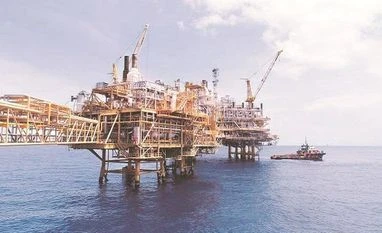 "Oil falls as US refineries shut; Washington pushes Opec to pump more")
WebinarsNew
Deep DiveNew
Explore Business Standard
U.S. West Texas Intermediate (WTI) crude futures were down 43 cents, or 0.6%, at $68.78.
By Laura Sanicola
NEW YORK (Reuters) -Oil fell on Tuesday on expectations for demand to fall after Hurricane Ida shuttered refiners on the U.S. Gulf Coast, and as producing nations in OPEC+ geared up to meet on Wednesday with the United States calling for suppliers to pump more crude.
Brent crude futures for October, due to expire on Tuesday, fell 39 cents, or 0.5%, to $73.02 a barrel by 11:08 a.m. EDT (1508 GMT).
U.S. West Texas Intermediate (WTI) crude futures were down 43 cents, or 0.6%, at $68.78.
Both benchmarks were on track for their first monthly loss since March but were still not far from their July highs, when Brent rose to its strongest since 2018 and U.S. crude since 2014.
Hurricane Ida, which made landfall in the United States on Sunday as a Category 4 hurricane, knocked out at least 94% of offshore Gulf of Mexico oil and gas production and caused "catastrophic" damage to Louisiana's grid.
Prices were pressured by concerns that power outages and flooding in Louisiana after Hurricane Ida will cut crude demand from refineries.
About 1.7 million bpd of offshore oil production was shut, but that output may resume more quickly than many refining operations along the Gulf that lost power and have limited access. Analysts at FGE said in a Tuesday note they expect roughly three-quarters of offshore output to resume by the end of the week.
OPEC and allied producers in OPEC+ had agreed to add 400,000 barrels per day (bpd) to monthly supply until the end of December. Sources told Reuters the group is likely to maintain that plan despite U.S. pressure for more output.
"It looks like sticking to the plan from the last meeting," an OPEC+ source told Reuters.
OPEC's own data showed the market will face a deficit until the end of 2021 but then flip into a surplus in 2022.
The Colonial Pipeline - the largest U.S. fuel line to the East Coast - restarted its main gasoline and distillate lines on Tuesday after shutting ahead of the storm, but loss of power in the region could prevent refining capacity from returning.
"Colonial's return is helping ease New York Harbor but the true impact of the loss of power in the region is unknown, which is weighing on the market," said John Kilduff, partner at Again Capital LLC in New York.
(Additional reporting by Dmitry Zhdannikov in London, Sonali Paul in Melbourne, Koustav Samanta in Singapore and Alex Lawler in LondonEditing by Jan Harvey, David Goodman and David Gregorio)
(Only the headline and picture of this report may have been reworked by the Business Standard staff; the rest of the content is auto-generated from a syndicated feed.)
First Published: Aug 31 2021 | 11:07 PM IST


 Connect with us on WhatsApp