
Oil prices drop as US inventories rise, inflation fears at fore
US crude inventories rose by 1 million barrels in the most recent week, short of estimates for a 2.1 million build in crude stocks
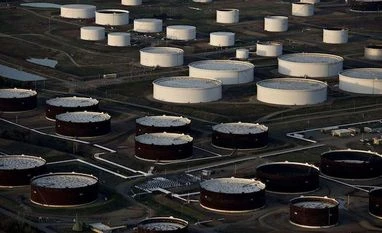 "Oil prices drop as US inventories rise, inflation fears at fore")
Explore Business Standard
US crude inventories rose by 1 million barrels in the most recent week, short of estimates for a 2.1 million build in crude stocks
By David Gaffen
NEW YORK (Reuters) -Oil prices edged lower after U.S. President Joe Biden said his administration was looking for ways to reduce energy costs amid a broader increase in inflation.
Consumer inflation data on Wednesday showed prices were rising at a 6.2% year-over-year rate, their highest level in three decades, and may spur both the White House and U.S. Federal Reserve to take action to curb that growth.
President Biden said he had asked the National Economic Council to work to reduce energy costs and the Federal Trade Commission to push back on market manipulation in the energy sector in a larger push to reverse inflation.
Inflation is heating up as the economic drag from the summer wave of COVID-19 infections fades and supply bottlenecks persist. The Federal Reserve is expected to try to stave the ongoing increase in prices, which has lasted longer than originally anticipated.
That sparked a rally in the dollar, which undermines the price of oil, as it raises the cost for other nations because oil is largely transacted in dollars.
"There's, no doubt, more pressure on the administration after the inflation reading numbers today," said Phil Flynn, senior analyst at Price Futures Group. "There's a growing concern the Fed may have to go back to acting more aggressively on a rate increase so that's given the dollar a rally."
U.S. crude inventories rose by 1 million barrels in the most recent week, short of estimates for a 2.1 million build in crude stocks.
Brent crude futures were at $83.77 a barrel at 11:41 a.m. EST (1641 GMT), down $1.04, a 1.2% drop. U.S. West Texas Intermediate (WTI) crude futures fell by $1.71, or 2%, to $82.45.
Several traders on Wednesday also attributed the drop in oil to profit-taking after a rally that lifted crude to seven-year highs.
Vitol Group CEO Russell Hardy said on Tuesday that oil demand had returned to pre-pandemic levels and demand in the first quarter of 2022 could exceed 2019 levels, potentially pushing prices to $100 per barrel.
Energy trader Gunvor Group expects oil prices to be around current levels this time next year, its chief executive Torbjorn Tornqvist told the Reuters Commodities Summit on Wednesday.
The White House has tiptoed around the possibility of releasing oil from the U.S. Strategic Petroleum Reserve amid concern over recent soaring gasoline prices. Generally, the U.S. taps the SPR in the case of emergencies, like hurricanes.
Wednesday's EIA figures showed the U.S. did release roughly 3.1 million barrels from the SPR - the largest one-week release since July 2017. That sale would have been previously approved by U.S. Congress.
(Reporting by David Gaffen; additional reporting by Ahmad Ghaddar, Sonali Paul and Florence Tan in SingaporeEditing by Kirsten Donovan, Elaine Hardcastle and Andrei Khalip)
(Only the headline and picture of this report may have been reworked by the Business Standard staff; the rest of the content is auto-generated from a syndicated feed.)
First Published: Nov 10 2021 | 11:59 PM IST


