Pakistani Prime Minister Shahid Khaqan Abbasi said on Thursday his country has developed short-range nuclear weapons to counter the 'cold start doctrine' adopted by the Indian Army.
Abbasi was also assertive of Pakistan's nuclear arsenals being safe and secure.
"We have a very robust and secure command-and-control system over our strategic nuclear assets. Time has proved that it's a process that is very secure. It's a process that has complete civilian oversight through the NCA," Abbasi said in response to a question at the Council on Foreign Relations, a top American think-tank.
The Nuclear Command Authority (NCA) of Pakistan is the authority responsible for command, control and operational decisions regarding India's nuclear arsenals.
"As far as tactical nuclear weapons (are concerned), we do not have any fielded tactical nuclear weapons. We have developed short-range nuclear weapons as a counter to the Cold Start doctrine that India has developed. Again, those are in the same command-and-control authority that controls the other strategic weapons," he said.
Moderator David Sanger said Pakistan has the fastest growing nuclear arsenal in the world.
"There's no nuclear arsenal in the world that is growing faster. And there's no nuclear arsenal in the world, other than North Korea's, that tends to worry American more, because they worry about the safety of the arsenal. They worry about the command and control of the arsenal," Sanger said.
Abbasi said that the command-and-control systems they have in place are as secure as anybody else's in the world.
"The last 20 years are testament to that," Abbasi said in response to another question.
"So let there be no doubt that any extremist element or somebody like that can gain control of fissile material or a nuclear weapon. There is just no possibility of that. And it's time-tested, and it's a very secure system that has been put in place," he said.
"Pakistan is a responsible global citizen, and we've shown a responsibility on the ground with this huge war on terror that we've been fighting for the last 15 years," Abbasi said.
The Pakistan premier sought to dispel the notion surrounding the country's alleged inability to handle its nuclear programmes properly.
"We do have nuclear capability. There's no doubt about that. And we know how to handle nuclear waste. We had a nuclear program in the early '60s, one of the first countries in Asia to have a nuclear program. So if we've managed it for over 50-odd years, I think we can continue to manage it," he said.

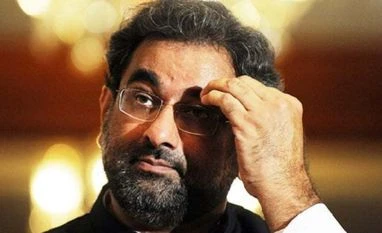 "Pak's short-range nukes to counter India's cold start doctrine: PM Abbasi")


 Connect with us on WhatsApp