
Serious risk of a nuclear war real; Nato using proxy, says Russia
US, allies pledge heavy arms for Ukraine, brushing off Russian N-war warning
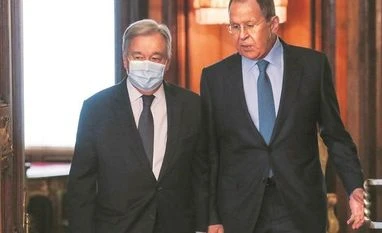 "Serious risk of a nuclear war real; Nato using proxy, says Russia")
premium
WebinarsNew
Deep DiveNew
Explore Business Standard
US, allies pledge heavy arms for Ukraine, brushing off Russian N-war warning
Attempt to raise tensions, says Moldova, after blasts in pro-Russia region
Moldova’s president warned on Tuesday that a spate of attacks in its Russia-backed breakaway region of Transdniestria were an attempt to escalate tensions, blaming “pro-war factions” within the territory. Meanwhile, the head of the breakaway Moldovan region of Transdniestria said attacks on the territory could be traced back to Ukraine, the TASS news agency reported on Tuesday. “I assume that those who organised this attack have the purpose of dragging Transdniestria into the conflict,” Vadim Krasnoselsky, the self-styled president of the breakaway region was quoted as saying. Speaking at a news conference after an emergency Security Council meeting, President Maia Sandu said she did not plan to talk with the Kremlin about the incidents over the past 24 hours that included an attack on Transdniestria’s interior ministry and the destruction of two radio masts that broadcast Russian radio.
Already subscribed? Log in
Subscribe to read the full story →

3 Months
₹300/Month
1 Year
₹225/Month
2 Years
₹162/Month
Renews automatically, cancel anytime

Premium stories handpicked daily by our editors


News, Games, Cooking, Audio, Wirecutter & The Athletic
Digital replica of our daily newspaper — with options to read, save, and share


Insights on markets, finance, politics, tech, and more delivered to your inbox
In-depth market analysis & insights with access to The Smart Investor


Repository of articles and publications dating back to 1997
Uninterrupted reading experience with no advertisements


Access Business Standard across devices — mobile, tablet, or PC, via web or app
First Published: Apr 27 2022 | 12:44 AM IST


 Connect with us on WhatsApp