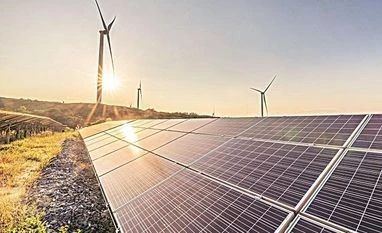
Solar the 'new king' of power, will break records for decades to come: IEA

The combined share of solar photovoltaic (PV) and wind in global generation will rise to almost 30% in 2030 from 8% in 2019, it said, with solar PV capacity growing by an average 12% a year

Solar energy
"I see solar becoming the new king of the world's electricity markets," IEA Executive Director Fatih Birol said
Reuters
2 min read Last Updated : Oct 14 2020 | 1:43 AM IST
Solar output is expected to lead a surge in renewable power supply in the next decade, the International Energy Agency said, with renewables seen accounting for 80% of growth in global electricity generation under current conditions.
 
In its annual World Energy Outlook on Tuesday, the IEA said in its central scenario - which reflects policy intentions and targets already announced - renewables are expected to overtake coal as the primary means of producing electricity by 2025.
 
The combined share of solar photovoltaic (PV) and wind in global generation will rise to almost 30% in 2030 from 8% in 2019, it said, with solar PV capacity growing by an average 12% a year.
 
"I see solar becoming the new king of the world's electricity markets," IEA Executive Director Fatih Birol said.
 
"Based on today's policy settings, it is on track to set new records for deployment every year after 2022." Maturing technology and support mechanisms have cut financing costs for major solar PV projects, the IEA said, helping to bring down output costs overall. Solar PV is now cheaper than new coal- or gas-fired power plants in most countries, it said.
 
Power generation from renewables is the only major source of energy that continued to grow in 2020, the Paris-based agency added.
 
A more ambitious scenario, including for instance the adoption of net-zero emissions targets by 2050, would see PV electricity generation perform more strongly still, the report said.
 
Despite the increase in solar and wind power, carbon emissions are projected to pick up in 2021 after a 2.4 gigatonne (Gt) drop in 2020, and to exceed 2019 levels in 2027 before growing to 36 Gt in 2030, it added.
 
The IEA said gaps remain in many cases between long-term ambitions and specific near-term plans to curb emissions.
Integrating new wind and solar power will depend on adequate investment in all parts of the system, including distribution networks, the report added.
 
But revenue shortfalls - potentially arising from lower-than-expected demand, non-payment of bills, or the detoriating finances of utilities in developing economies - could make power grids a weak link.

One subscription. Two world-class reads.

Already subscribed? Log in

Subscribe to read the full story →
*Subscribe to Business Standard digital and get complimentary access to The New York Times

Smart Quarterly

₹900

3 Months

₹300/Month

SAVE 25%

Smart Essential

₹2,700

1 Year

₹225/Month

SAVE 46%
*Complimentary New York Times access for the 2nd year will be given after 12 months

Super Saver

₹3,900

2 Years

₹162/Month

Subscribe

Renews automatically, cancel anytime

Here’s what’s included in our digital subscription plans

Exclusive premium stories online

  • Over 30 premium stories daily, handpicked by our editors

Complimentary Access to The New York Times

  • News, Games, Cooking, Audio, Wirecutter & The Athletic

Business Standard Epaper

  • Digital replica of our daily newspaper — with options to read, save, and share

Curated Newsletters

  • Insights on markets, finance, politics, tech, and more delivered to your inbox

Market Analysis & Investment Insights

  • In-depth market analysis & insights with access to The Smart Investor

Archives

  • Repository of articles and publications dating back to 1997

Ad-free Reading

  • Uninterrupted reading experience with no advertisements

Seamless Access Across All Devices

  • Access Business Standard across devices — mobile, tablet, or PC, via web or app

Topics :solar energyInternational Energy Agency

Next Story