Because the world is getting warmer, it’s getting colder, too.
Crazy as that sounds, there’s an explanation in the northernmost corner of the planet, where temperatures are rising twice as fast as anywhere else. That affects the jet streams churning through the upper atmosphere, and results in more weird winter cold snaps.
The ones that descended in early January on the US south brought snow and to deep-freeze amateurs in cities including Birmingham, Alabama, and Oxford, Mississippi. Another one expected as early as next weekend may push readings more than 15 degrees Fahrenheit (8 Celsius) below average across the north-central part of the country.
More frequent and persistent bouts of severe or unseasonal weather are in most everyone’s future if the Arctic’s rapid warming continues, according to new research. Simply put, there will be fewer years when “climate is just average,” said Valerie Trouet, an associate professor at the University of Arizona’s School of Natural Resources and the Environment. “More extreme positions of the jet mean more extreme weather.”
The reason: Climate change is reducing the gap between North Pole temperatures and those to the south, weakening winds in the upper atmosphere and creating conditions that propel their currents in unusual new ways.
The North Atlantic jet stream has been moving exceptionally far north or south more frequently since the 1960s than at any time in the last 300 years, according to a study co-authored by Trouet and published in the journal Nature Communications. This is the first research to use climatological data gleaned from tree-growth rings to reconstruct centuries of wind patterns.
The average air temperature over Arctic land last year was the second highest, after 2016, since 1900. Readings were 2.9 degrees Fahrenheit above the average for 1981 to 2010, according to a report sponsored by the National Oceanic and Atmospheric Administration.
Read this article for free
Register to continue reading premium journalism and analysis from Business Standard.

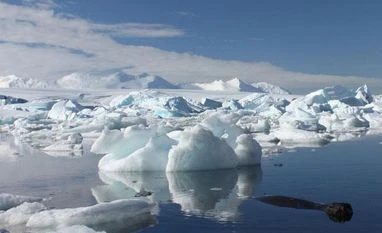 "The US is about to get real cold again; blame it on global warming")












 Connect with us on WhatsApp