
UK PM Johnson unveils 5 billion-pound plan to fuel economic recovery
British Prime Minister Boris Johnson announced a 5-billion-pound (about US $6.2 billion) plan to fuel economic recovery in the wake of the coronavirus crisis.
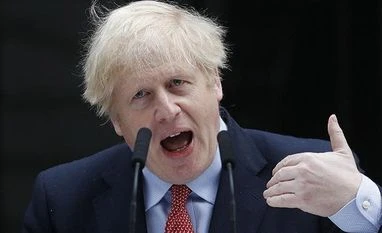 "UK PM Johnson unveils 5 billion-pound plan to fuel economic recovery")
WebinarsNew
Deep DiveNew
Explore Business Standard
British Prime Minister Boris Johnson announced a 5-billion-pound (about US $6.2 billion) plan to fuel economic recovery in the wake of the coronavirus crisis.
British Prime Minister Boris Johnson announced a 5-billion-pound (about US $6.2 billion) plan to fuel economic recovery in the wake of the coronavirus crisis.
In a speech in Dudley on Tuesday, a city close to Birmingham in the West Midlands region, Johnson said the government "is wholly committed not just to defeating coronavirus, but to using this crisis finally to tackle this country's great unresolved challenges of the last three decades," Xinhua news agency reported.
At a podium decorated with the slogan "build, build, build", Johnson noted the new plan is an "infrastructure revolution" to "build and rebuild those vital connexions to every part of the UK."
According to a statement from 10 Downing Street, the massive plan covers hospital maintenance, road network, school rebuilding and courts upgrades, through a bold program of "national renewal, uniting and levelling up the UK".
In his speech, Johnson regarded coronavirus crisis as the biggest and most immediate economic challenge that Britain faces.
"We must work fast because we have already seen the vertiginous drop in GDP and we know that people are worried now about their jobs and their businesses," he said.
"We will not be responding to this crisis with what people called austerity," Johnson added, "next week the Chancellor (of the Exchequer Rishi Sunak) will be setting out immediate plan to support the economy through the first phase of recovery," he said.
Johnson also said the government will continue and step up the biggest ever program of funding the National Health Service (NHS) and Health Secretary Matt Hancock will set out the list of 40 new hospitals in the next few days.
Britain's economy shrunk by a record 20.4 per cent in April as a result of lockdown measures. Ruth Gregory, senior UK economist from the London-based economic research consultancy Capital Economics, said the prime Minister's announcement signals that the British government's intention is to sustain the fiscal stimulus further ahead, rather than lurch towards fiscal austerity as it did after the global financial crisis.
--IANS
rt/
(Only the headline and picture of this report may have been reworked by the Business Standard staff; the rest of the content is auto-generated from a syndicated feed.)
First Published: Jul 01 2020 | 4:15 AM IST

