US starts investigating China's intellectual-property practices

Chinese government says it will defend its legal rights if US hurts bilateral trade
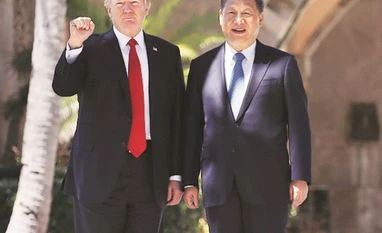
Donald Trump and Xi Jinping
Andrew Mayeda | Bloomberg
Last Updated : Aug 20 2017 | 1:10 AM IST
US Trade Representative Robert Lighthizer officially started a probe into China’s intellectual-property practices, less than a week after President Donald Trump asked him to consider the move.

The US will investigate China’s policies and practices related to technology transfer, IP and innovation to determine if the behaviour is “unreasonable or discriminatory” or restricts US commerce, Lighthizer said in a statement. “After consulting with stakeholders and other government agencies, I have determined that these critical issues merit a thorough investigation,” Lighthizer said.

Trump on Monday signed an executive memo directing USTR to consider probing China’s IP practices under Section 301 of the 1974 Trade Act. The provision gives the president broad authority to impose tariffs on foreign goods, though such unilateral action has rarely been used since the creation of the World Trade Organization in 1995, according to trade experts.

The IP issue is the latest source of tension between the world’s two biggest economies, which have seen relations cool since Trump and Chinese President Xi Jinping bonded on a visit to the former’s Mar-a-Lago resort earlier this year. The probe threatens to further complicate the countries’ efforts to contain North Korea’s nuclear threat.

China’s Ministry of Commerce responded Tuesday to Trump’s memo with a statement saying it “will resort to all proper measures” to defend its rights if the US disregards multilateral rules and hurts bilateral trade.

USTR said an inter-agency panel will hold a public hearing October 10, and it invited those interested in the issue to submit comments by September 28. USTR has argued in the past that Beijing uses a range of practices to force US companies to transfer IP, such as by granting regulatory approvals to drug makers that shift production to China or requiring that the designs of foreign products be replicable in China.

“It’s my duty and responsibility to protect the American workers’ technology and industry from unfair and abusive actions,” Trump said at the White House on Monday. “We will stand up to any country that unlawfully forces American companies to transfer their valuable technology as a condition of market access. We will combat the counterfeiting and piracy that destroys American jobs.”

Bloomberg

One subscription. Two world-class reads.

Already subscribed? Log in

Subscribe to read the full story →
*Subscribe to Business Standard digital and get complimentary access to The New York Times

Smart Quarterly

₹900

3 Months

₹300/Month

SAVE 25%

Smart Essential

₹2,700

1 Year

₹225/Month

SAVE 46%
*Complimentary New York Times access for the 2nd year will be given after 12 months

Super Saver

₹3,900

2 Years

₹162/Month

Subscribe

Renews automatically, cancel anytime

Here’s what’s included in our digital subscription plans

Exclusive premium stories online

  • Over 30 premium stories daily, handpicked by our editors

Complimentary Access to The New York Times

  • News, Games, Cooking, Audio, Wirecutter & The Athletic

Business Standard Epaper

  • Digital replica of our daily newspaper — with options to read, save, and share

Curated Newsletters

  • Insights on markets, finance, politics, tech, and more delivered to your inbox

Market Analysis & Investment Insights

  • In-depth market analysis & insights with access to The Smart Investor

Archives

  • Repository of articles and publications dating back to 1997

Ad-free Reading

  • Uninterrupted reading experience with no advertisements

Seamless Access Across All Devices

  • Access Business Standard across devices — mobile, tablet, or PC, via web or app

Next Story



