What Gucci can teach the Democrats

It is the educated consumer who caused an epiphany on both the high street and the haute street
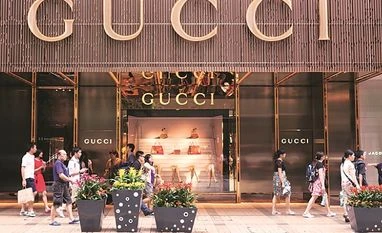
Gucci, retail shop, Gucci oulet
A few higher-end retail sites have been offering same-day service in world capitals and vacation destinations for a while now, but a recent Gucci deal takes it to a whole new level. Photo: iSTOCK
Vanessa Friedman | NYT
Last Updated : Jul 10 2017 | 12:14 PM IST
In all the explanations of voter behavior that have been floated over the past few months, the one that I can’t quite get out of my mind is a recent comment from Tony Travers, a professor of government at the London School of Economics, who told The New York Times that “people are switching loyalties, not tribally, but like consumers.”

He was talking about the British election last month and the defection of so many presumed Conservative voters to the rumpled promise of Jeremy Corbyn, but he could just as easily have been talking about the French election and rise of that shiny new brand otherwise known as Emmanuel Macron. Or even the 2016 election in the United States. After all, on each occasion, voters shopped around before committing — or deciding to stay home.

In the United States, both Republicans and Democrats saw their historic marques (Bush, Clinton) eschewed in favor of the candidate who ran on the clarion call of ending the establishment. President Trump may nominally be a Republican, but he is his own brand — complete with shiny gold logo — above all.

Consider the following statement: “People’s allegiance to traditional brands has been deteriorating, so now we see the rise of new brands” — and consider that it is not from a retail consultant but from Bennet Ratcliff, founder of Thaw Strategies and a former international political consultant.

It’s beginning to give me a nagging sense of déjà vu. Anyone in fashion has been here before.

Indeed, as most apparel brands, high and low, could tell you, the transformation of their customer base from people acting out of allegiance to an inherited group ethos to people acting as individuals motivated by personal desire began taking place almost a decade ago.

Robert Burke, the former fashion director of Bergdorf Goodman and founder of a luxury consultancy, describes it this way: “We used to talk about ‘the designer customer’ or the ‘fast fashion customer’ or ‘the Céline customer,’ and if someone fit into those categories, their choices were largely predictable and they did not cross over. Starting in about 2006, 2007 and then after the economic downturn, that completely changed. They became much more independent.” Also less predictable.

Consumers of clothing began to make choices dictated not by what was expected of them or what had been prescribed for them from head to toe by a brand whose value system they inherited, but by whatever fit them best — whatever felt most tailored to them individually — at that moment.

One way to think of this is to compare the wardrobe of Princess Diana, with her early allegiance to Liberty scarves and hunting tweeds, with that of the current Duchess of Cambridge, whose dresses swing from the modestly priced Topshop to the high-fashion Alexander McQueen. Or think about the shift in the closets of Wall Street bankers from a menagerie of animal-print Hermès ties to casual-Friday anonymity. Or the rise and fall of J. Crew.

So if it is true that political consumers are following the same broad model of behavior as clothing consumers, would it not make sense to ask whether there is something political parties could learn from the strategic adaptations of clothing brands?

They haven’t necessarily solved the loyalty problem. But they have definitely been experimenting with a new approach. And their success is measured not every two or four years but every quarter.

The results have altered both the geography of retail and the balance of power, shifting it from a one-way communication highway (the brand spoke; the consumer listened) to a dialogue.

When Saks opened its new store in Brookfield Place in Lower Manhattan, for example, it did so with floors that had been configured so that instead of their having a “designer” section and a “contemporary” section, borders between areas had been avoided.

Why should a shopper who wanted cool sneakers to wear with a tuxedo have to go from department to department, or even to different floors, to find what he was looking for, potentially getting bored or irritated in the process and deciding to go elsewhere? Instead, choice was laid at his feet: options stretching out along a single floor as far as the eye could see.

Brands discovered that consumers were confused by the plethora of lines (literal and metaphorical) that industry wisdom had dictated, so they combined them into one that bridged price points and moods and was united by a single identifiable message.

Instead of selling separate outerwear and weekend and high-fashion collections with different names and ad campaigns that appeared on different platforms, fragmenting its audience, Burberry merged them all into one: Its big tent is defined by an overriding vision of British tradition with a mash-up edge that could encompass a rainbow of trench coats or made-to-order capes, silken Bloomsbury-set pajamas suits or sculptural white shirts, all at the same time.

Conglomerates such as LVMH Moët Hennessy Louis Vuitton adopted an approach of semi-radical transparency, and instead of cloaking themselves in their former air of mystery, which turned out to be creating distance instead of intrigue, invited potential consumers into the ateliers to see their artisans in the process of making their products, humanizing themselves along the way.

They transformed their retail temples, formerly hushed chambers with products on pedestals, into lounges where customers could hang out and “feel at home.” And they began to place as much importance on (and investment in) peer-to-peer and influencer opinion as they have on celebrity endorsement.

Clearly a political party is not a fashion company. And the stakes, for all of us, are much higher in the voting booth than in the fitting room. But before everyone takes umbrage at the idea of ever connecting the two or conflating what is often stereotyped as superficial with what is considered substantive, it’s worth remembering what caused the epiphany on both the high street and the haute street: the advent of the educated consumer.

Isn’t that what we want for the electorate, too?

One subscription. Two world-class reads.

Already subscribed? Log in

Subscribe to read the full story →
*Subscribe to Business Standard digital and get complimentary access to The New York Times

Smart Quarterly

₹900

3 Months

₹300/Month

SAVE 25%

Smart Essential

₹2,700

1 Year

₹225/Month

SAVE 46%
*Complimentary New York Times access for the 2nd year will be given after 12 months

Super Saver

₹3,900

2 Years

₹162/Month

Subscribe

Renews automatically, cancel anytime

Here’s what’s included in our digital subscription plans

Exclusive premium stories online

  • Over 30 premium stories daily, handpicked by our editors

Complimentary Access to The New York Times

  • News, Games, Cooking, Audio, Wirecutter & The Athletic

Business Standard Epaper

  • Digital replica of our daily newspaper — with options to read, save, and share

Curated Newsletters

  • Insights on markets, finance, politics, tech, and more delivered to your inbox

Market Analysis & Investment Insights

  • In-depth market analysis & insights with access to The Smart Investor

Archives

  • Repository of articles and publications dating back to 1997

Ad-free Reading

  • Uninterrupted reading experience with no advertisements

Seamless Access Across All Devices

  • Access Business Standard across devices — mobile, tablet, or PC, via web or app

Next Story



