BBL has to pay special attention to the number of males hired, or else women will dominate the firm, Voravan said.
“Financial jobs require very detailed and cautious persons,” she said. “This may fit the female character more.”
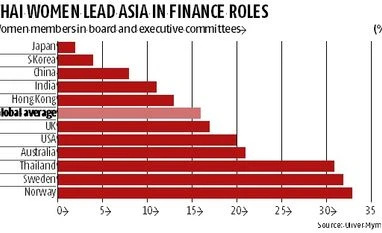
Women account for 57 per cent of Thailand’s finance and insurance workforce, according to government statistics. Yet the fact that two-thirds of senior management and executive roles are filled by men indicates Thai women still face challenges in achieving equality, said Joni Simpson, a specialist on gender, equality and non-discrimination at the International Labor Organization in Bangkok.
“Accounting is a field that is accessible to women in Thailand, and therefore they have been able to advance in this sector and are highly visible across several levels of jobs,” she said, citing cultural norms and attitudes in Thailand. “The chances are better for women to advance to the highest levels.”
Yet across all industries, Thai women account for less than 10 per cent of executive and management roles on average, she said. More work needs to be done in all sectors including finance to encourage mentoring, access to childcare and eldercare, and chances for advancement, she said.
Still, Thailand’s high proportion of women in senior financial roles happened without government legislation, said Bandid Nijathaworn, chief executive officer at the Thai Institute of Directors and a former deputy governor of the Bank of Thailand. Norway and Sweden, like other countries in Europe and elsewhere, have enacted laws requiring companies to have 30 per cent of their boards comprised of women.
The Thai central bank has had a female governor, from 2006 to 2010, and at least half of its managerial staff is female. At the Stock Exchange of Thailand, the president is female, as are almost 70 per cent of workers. Thailand has also had a female prime minister, Yingluck Shinawatra, the sister of the ruler deposed in a 2006 coup.
Bloomberg

 "Where women rule finance and men think banking is boring")












 Connect with us on WhatsApp