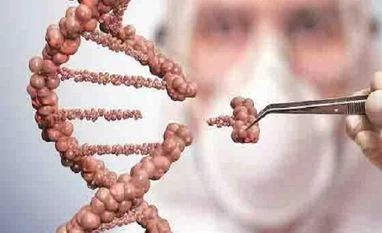
The gene is called CCR₅. It creates a protein that makes it possible for H.I.V., the virus that causes AIDS, to infect people’s cells. Dr. He said that with the help of an H.I.V./AIDS advocacy organization in China, he recruited couples in which the man had H.I.V. and the woman did not. He used the Crispr-Cas9 editing technique to try to disable the CCR₅ gene in their embryos, with a goal, he said, of creating babies who would be resistant to H.I.V. infection.
Dr. He, 34, first worked with the Crispr gene-editing technology while obtaining a doctorate in biophysics from Rice University in Houston. He did postdoctoral research at Stanford and returned to his native China in 2012 under a program designed to draw Western-trained Chinese researchers back home. There, he founded two genetic-testing companies, and became affiliated with the Southern University of Science and Technology in Shenzhen.
Changing the genes in an embryo means changing genes in every cell. If the method succeeds, the baby will have alterations that will be inherited by all of the child’s progeny. And that, scientists agree, is a serious undertaking that must be done with great deliberation and only to treat a serious disease for which there are no other options — if it is to be done at all.
Many scientists are concerned that Dr. He’s experiment could have a chilling effect on support for legitimate and valuable gene-editing research.
In the United States, Congress has barred the Food and Drug Administration from even considering clinical trials involving human embryo editing. The National Institutes of Health is prohibited from funding such research. The National Academies of Science, Engineering, and Medicine issued a report in 2017 concluding that editing the genes of human embryos should only be acceptable in the narrowest of circumstances. It would have to be used to correct a serious genetic disorder that causes disease or disability; there would have to be no other alternatives; there would have to be good evidence that the benefits would outweigh the risks; and there would have to be a plan in place to follow the gene-edited children.
Some worry that this is the first step toward using gene editing to create people with extreme intelligence, beauty or athletic ability. But that, for now, is not possible. Such traits are thought to be affected by possibly hundreds of genes acting in concert, and affected in turn by the environment.
Until Dr. He publishes the results of his work in a peer-reviewed medical journal, we will not know the detailed results of the embryo editing, or even whether the twins were actually born.
One subscription. Two world-class reads.
Already subscribed? Log in
Subscribe to read the full story →
Smart Quarterly
₹900
3 Months
₹300/Month
Smart Essential
₹2,700
1 Year
₹225/Month
Super Saver
₹3,900
2 Years
₹162/Month
Renews automatically, cancel anytime
Here’s what’s included in our digital subscription plans
Exclusive premium stories online
Over 30 premium stories daily, handpicked by our editors


Complimentary Access to The New York Times
News, Games, Cooking, Audio, Wirecutter & The Athletic
Business Standard Epaper
Digital replica of our daily newspaper — with options to read, save, and share


Curated Newsletters
Insights on markets, finance, politics, tech, and more delivered to your inbox
Market Analysis & Investment Insights
In-depth market analysis & insights with access to The Smart Investor


Archives
Repository of articles and publications dating back to 1997
Ad-free Reading
Uninterrupted reading experience with no advertisements


Seamless Access Across All Devices
Access Business Standard across devices — mobile, tablet, or PC, via web or app
)