Amul takes the stamina test
GCMMF pits itself against Pepsi, Heinz and GSK with the re-launch of its sports drink. Can it get it right the second time?
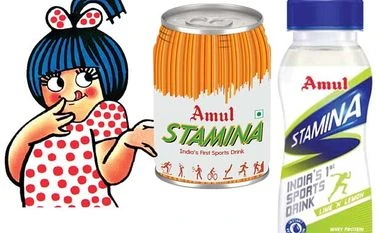
Sohini Das Ahmedabad Homegrown food major Gujarat Cooperative Milk Marketing Federation (GCMMF), the owner of brand Amul, is looking at making a splash in the relatively nascent sports drink category in India, with the recent re-launch of its whey-protein based sports drink Stamina in PET bottles. It is gearing up for a television campaign next summer and has started off its promotional initiatives with a print campaign for the product.
Sports drinks are a small but growing category in India. Major brands are PepsiCo's Gatorade, Heinz India's Glucon D Isotonik and Glaxo SmithKline's (GSK) Lucozade. While the market share that each brand enjoys is not known, Gatorade and Glucon D are considered the largest players in the segment. Amul's Stamina seems to be pitched against Pepsi's Gatorade as both are now available in PET bottles and also priced similar; a 500 ml bottle of Gatorade costs around Rs 40 and Stamina comes for Rs 15 for a 200 ml pack. The Rs 200 crore market, however, seems an unlikely place for giants like Amul and Pepsi to be slugging it out. But size may be a deceptive indicator of the category's potential; industry insiders say that the segment has been clocking an over 30 per cent growth rate in the last eight to 10 years. And Amul is convinced that such drinks have enormous appeal within the teenage community, which it plans to tap into.
| SWEATING IT OUT |
- The sports drinks market: Rs 200 crore
- Category growth rate: 30%
- Major brands: Gatorade (Pepsi), Glucon D (Heinz), Lucozade (Glaxo Smithkline)
- Re-launched: Stamina (Amul); first launched in 2006 in cartons, made available in cans in 2011 and now in PET bottles. Ongoing print campaign to create awareness, television campaign to start 2016 summer
|
This is not the first time that Amul is trying to break into this segment. Stamina was initially launched in 2006. It, however, did not make much of an impression at the time and the brand soon faded away. In its second attempt Amul is hoping to be better prepared and take advantage of the growing health consciousness among average Indians. It plans to work on creating greater awareness about sports drinks too. In a hot and humid country like India, it potentially has a huge market among school children, gymnasium going adults, and even as the common man goes about his daily activities out in the sun. The category, however, is largely confused with energy drinks (estimated to be a bigger market of about Rs 700 crore). Energy drinks usually contain caffeine and are unfit for children.
R S Sodhi, managing director of GCMMF says, 'Awareness is a major issue. We have to work on building consumer perception.'
Amul is also looking at packaging the drink differently. Stamina was earlier available in cartons (2006) and thereafter in cans (around 2011), and now it will come in a PET bottle just like PepsiCo's Gatorade.
What does Amul's re-entry mean for Pepsi? A PepsiCo India spokesperson said, 'Gatorade has been rated as the world's Number 1 sports drink, as per the 2014 research from Canadean.' It was launched in India in 2004, around the same time Amul had launched Stamina. While Amul markets Stamina as India's first sports drink, perhaps referring to the fact that it was indigenously developed, Gatorade has a strong brand push behind it. PepsiCo says, 'Gatorade has been associated with leading sporting leagues such as Pepsi IPL, Indian Soccer League (ISL), Hockey India League (HIL) along with various marathons across the country and has become an integral part of the kitbags of many leading sportspersons.'
Sodhi is aware of the competition. 'These are established brands and we would have to spend actively to build consumer awareness as well as a perception for Amul's Stamina,' he says. However Amul's budget for brand promotions is fixed at one per cent of its turnover and the Federation will have to work within these constraints.
Brand experts are skeptical. Harish Bijoor, CEO of Harish Bijoor Consults says, 'It (Stamina) is a milk-based beverage, and by its sheer nature, likely to lose its appeal beyond children.' Adults usually prefer water-based drinks Bijoor believes. 'On top of this, Gatorade is kind of a style statement. The brand has been positioned that way,' he says.
Bijoor also believes that Heinz's Glucon D holds an edge in the teenage segment that Amul wants to tap into. 'It comes in a powder form, and is easy to carry and more affordable. Amul would have to decide which end of the market they want to compete in,' he explains. Amul, however, has no plans to launch a powdered version anytime soon. As to whether milk-based sports beverages will hit it off with young consumers, it's too early to answer that one. But the battle of the brands has just begun.

 "Amul takes the stamina test")


 Connect with us on WhatsApp