India has not been a smooth ride for Uber. It is making the San Francisco-based mobile taxi service company that ran into safety and regulatory issues a year into its entry (first launched in 2013 in Bangalore, and then in Mumbai in early 2014) twist and adjust to a population that is unwieldy but if tamed, highly rewarding. And, Uber is pulling all stops to put its unsavoury start behind it, even if it means putting a face to its name and going offline for a strong online business.
Even though Uber has faced resistance from traditional transport groups and drawn flak for its handling of female passenger safety issues across many of its markets, it is only in India where it is making major exceptions to its business model. India is already Uber's largest market after its homeground, the US, by number of cities it plies in (18 cities).
In what is essentially a mobile app-based business model, Uber recently added four more cities (Ahmedabad, Chandigarh, Jaipur, and Kochi) besides the pilot city of Hyderabad, where its drivers will accept cash payments. It is discovering that the cash-on-delivery model is inescapable in Indian markets and is taking a major step by taking the transaction offline. It has credit card payment and pre-paid wallet options in all cities.
Shailesh Sawlani, the GM in Mumbai, explains, "The market in India is one of the global priorities. The teams here propose experiments from time to time to the team in San Francisco. The cash payment was one such. Offering it is part of our philosophy of choice as cash is a favoured payment option in smaller cities. But we will know whether to continue or not once this model matures." But the bigger changes the brand is bringing about, to get over the beating it has taken, are to its structure and liaisoning with public offices.
In a departure from its usual nimble start-up structure, Uber appointed a country head, Amit Jain, in May. Earlier city general managers would report into the regional general manager overseeing more than one country (Allen Penn, sitting out of Hong Kong, in this case). The US-headquarters would handle most of the corporate communication and the local teams, the city promotions, besides working on product (new service) launches together. But now Jain, who joined from the US-based portal Rent.com, is expected to drive Uber India's strategy, government liaisoning, and communication.
Uber's MoU with the Telengana government for a $50 million large-scale facility with around 500 employees will further boost the brand's chances, arming it with a support service centre to help out both riders, as Uber calls its users, and drivers. The brick and mortar investment, its largest one-time investment in India so far, is expected to come in over the next five years and will be the first outside of the US (Arizona), again.
Sawlani says, "India is a long-term play for Uber and we have been focusing our resources to improve safety, reliability and support." Of course, India is not the only uber-competitive market, with cut-throat pricing from others like Ola if one goes by its $1 billion budget for China this year alone.
Even though other app-based taxi aggregators had already entered the market, it was Uber which had to find out the hard way that assuming a mobile-app-only identity would not cut ice with public regulators. It had to first concede in Delhi that banned it in December last year, by applying for a radio cab service licence. The ban was lifted in early July by the Delhi High Court, though Uber still awaits its licence.
With two of its driver partners under arrest (both in Delhi-NCR) for sexual assault, Uber has had a lot of ground to cover in instilling faith in prospective users in the 18 cities it operates in. Besides city-based marketing drives, it is also working to let its riders get to know its drivers, both men and women, better. "Such knowledge improves the marketplace quality," says Sawlani.
It has also introduced an SOS button in its app that straightaway connects with the police on the phone and adopted additional third-party background checks of drivers. Another spokesperson says, "We are helping the authorities and riders understand that we have taken all necessary steps and gone beyond that. Our third-party checks are on top of existing commercial driver badge and police verification and character certificate for a commercial licence. The recourse we offer now is immediate and guaranteed."
Some of its hurdles will get ironed out with the Central guidelines on safety and regulatory issues for online taxi groups expected in a few weeks. It might hasten the biggest safety move by the company - installing a dedicated screen at police city headquarters - to get automatic alerts if there is an SOS call through its app. After testing in Calcutta, Uber is ready to go live with it in Bangalore. But Sawlani says, "We have been told it will take a few weeks. The stakeholders need time to see how best it can be managed because nowhere in the world, have we seen this kind of a public-private cooperation for transport security."
Expected to become the highest-valued private startup company in the world after it secures between $1.5 and $2 billion in a new round of funding, Uber is learning a thing or two from its Indian foray as well. Its cash experiment, for example, has travelled to Nairobi in Kenya. It has come a long way from its initial days where a minimum ride of Rs 200 was mandatory and it plied only high-end sedans. It now has smaller sedans and hatchbacks, options for autorickshaws even, in some cities, besides doing away with a minimum tariff. And just as it has cut its estimated time of arrival from 25 to seven minutes, Uber is striving to pull down the other hurdles in its path too.

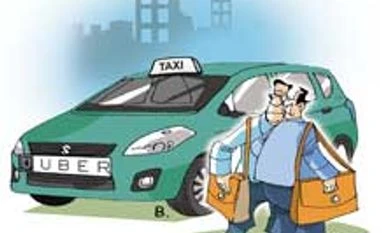 "Uber gets into its India gear")


 Connect with us on WhatsApp