The area under cotton cultivation in India has reached a record high of 12.25 million hectares and is expected to go up further to 12.5 mha, as sowing is still on in Andhra Pradesh and Karnataka.
This is set to push production to a new high, too. At the moment, however, those in the industry do not foresee a glut in the market, since they expect a rise in domestic consumption and of buying by other countries. Also, cotton traders and textile mills believe the record production would not lead to a price decline problem for farmers.
The Union agriculture ministry says farmers across the country seem to have shifted to cotton this kharif season because of stable prices and a better yield last year. “Also, last year, soybean farmers had to suffer because of high moisture, resulting in less return,” said J S Sandhu, agriculture commissioner. He said sowing in Gujarat, a major producer, had reached three mha, breaking records over the past 50 years.
Arun Dalal, a leading trader in this city, said there would be good export demand, checking a likely decline in import from China. “There is no possibility of a glut, as the domestic consumption has (also) been rising over the past few years. Further, there have been reports of reduction in the crop in Australia and a rise in consumption in Bangladesh. Turkey, Vietnam, Brazil and Indonesia are all likely to source cotton from India. All this is going to provide a cushion,” explained Dalal. “Domestically, new spinning capacity is also being added.”
According to K Selvaraju of the South Indian Mills Association, 1.5-2 mn spindles capacity is being added to the current 56 mn in the country. “We do not foresee any glut in cotton. Prices may have fallen but momentum in mills is picking up. Our fabric and garment industries will also pick up. More, due to delayed monsoon, the bulk of supply is expected in December as against the usual October-November. By then, demand-supply is expected to match,” he said.
The industry estimates domestic cotton consumption is likely to increase to 3.05-3.1 mn bales (a bale is 170 kg), up from 29 mn bales in the earlier cotton year (October-September). Home consumption is also expected to increase on the basis of increased yarn export, due to newer markets. “Yarn production is increasing gradually. Garment exports are also expected to get better. Even if there is surplus cotton, it will get exported to Bangladesh, Vietnam and Korea. The China situation might not impact consumption in the long run,” said DK Nair, secretary-general of the Confederation of Indian Textile Industry.
Prices are expected to go down but not by enough to impact the income of farmers, believes the industry. Its experts say the cost of production is around Rs 22,000 a ha in rain-fed regions, Rs 28,000 a ha in areas with canal-based irrigation and Rs 33,000 a ha where farmers use drip irrigation. Dalal feels the price of cotton is unlikely to dip below Rs 38,000 a candy (356 kg), due to higher production in 2014-15. Prices and those of yarn have already seen a correction, due to low market sentiment and reduced import from China. In July, cotton was Rs 43,000 a candy of 356 kg and of 30-count yarn at Rs 230 a kg. However, at present, prices are Rs 40,000-41,000 a candy; yarn is Rs 215 per kg.
According to J C Ladha, executive director of Rajasthan Spinning and Weaving Mills, the impact will not be much on farmers since cotton prices are expected to fall to Rs 36,000-37,000 a candy, still higher than the global one of Rs 31,000-32,000 a candy. “Moreover, the minimum support price has also been fixed at Rs 36,000 per candy. If the prices go below that, we are sure CCI (government-owned Cotton Corporation of India) will purchase from farmers,” he said.

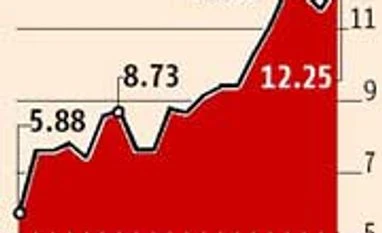 "Cotton acreage hits new record")


 Connect with us on WhatsApp