
Gold loses sparkle on MCX as share in volume hits 12-year low of 10.4%
Experts partly blame the commodity itself; Gold prices have not moved in a sustained manner over the past few years
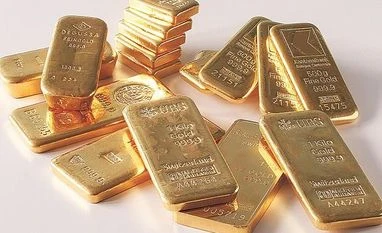 "Gold loses sparkle on MCX as share in volume hits 12-year low of 10.4%")
premium
WebinarsNew
Deep DiveNew
Explore Business Standard
Experts partly blame the commodity itself; Gold prices have not moved in a sustained manner over the past few years
Once contributing to over half to its overall trading business, gold has lost in attraction on the Multi Commodity Exchange of India (MCX).
Gold's daily average turnover (DAT) of about Rs 25 billion in calendar year 2018 till date on the exchange was the lowest in 12 years, despite several crests in overall DAT being recorded on the commodity bourse. This level of average turnover was not seen after the initial two calendar years of inception, 2004 and 2005, when it ran into a few millions. MCX is the country's largest commodity exchange (comex).
The decline indicates lack of price volatility in gold both in rupee and dollar terms. Normally, hedgers reduce activity in futures exchanges if the price of a commodity moves in a narrow range and gold is no exception. Limited room for product innovation also hit the turnover.
"No comment," said an MCX spokesperson in response to a Business Standard query.
After a record of nearly Rs 102.2 billion of gold turnover across all contracts on the MCX in calendar 2011, the DAT has been declining. Gold's contribution to the exchange's overall turnover has reduced to 10.4 per cent, the lowest since its full calendar year operation in 2004. MCX started operating in 2003.
The real fall started after the Reserve Bank of India restricted gold import by its '80:20' scheme in July 2013. At the same time, the commodity transaction tax was implemented, affecting volumes at all comexes. As a result of the fall in import and CTT, jobbing trades fell; the import restrictions also resulted in less need to hedge.
For calendar year 2018 so far, overall turnover at MCX is up 19 per cent to Rs 239.6 bn, from the average of Rs 201.4 bn in calendar 2017. The overall average turnover is the highest in five years.
"Lack of volatility is the major reason for the decline in gold volume at MCX. Another factor could be growing equity markets, which still remain traders' preference for high returns," said Jayant Manglik, president, Religare Equities.
Gold prices have moved in a narrow range in both Indian and global markets. Abroad, between $1,150 and $1,300 an oz, barring a few occasions, in the past five years. In rupee terms, Rs 27,500-31,000 per 10g, except on a few occasions for a short period.
"Partly, the blame lies with the commodity itself. Gold prices have not moved in a sustained manner over the past few years. Apart from that, the (US Federal Reserve's interest) rate hike cycle has helped gold's volatile move," said Gnanasekar Thiagarajan, director, Commtrendz Research.
Gold has offered a marginal 0.6 per cent return so far this calendar year, at an average price of $1,311 an oz in the international market. This was after a 13 per cent profit in calendar 2017. Sharp appreciation in the rupee, however, lowered the return for Indian investors at 4.8 per cent for calendar 2017.
Already subscribed? Log in
Subscribe to read the full story →

3 Months
₹300/Month
1 Year
₹225/Month
2 Years
₹162/Month
Renews automatically, cancel anytime

Premium stories handpicked daily by our editors


News, Games, Cooking, Audio, Wirecutter & The Athletic
Digital replica of our daily newspaper — with options to read, save, and share


Insights on markets, finance, politics, tech, and more delivered to your inbox
In-depth market analysis & insights with access to The Smart Investor


Repository of articles and publications dating back to 1997
Uninterrupted reading experience with no advertisements


Access Business Standard across devices — mobile, tablet, or PC, via web or app
First Published: Mar 24 2018 | 12:42 AM IST


 Connect with us on WhatsApp