ICICI Bank stock gains 6.9%; stress recognition almost over, say analysts

The market gave a thumbs-up as it expects an improvement in the bank's balance sheet
ICICI
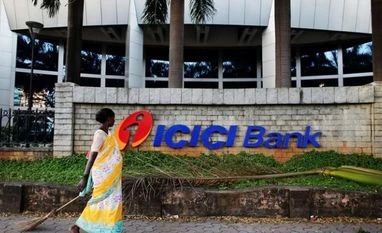
A municipal worker walks past a logo of ICICI Bank at its headquarters in Mumbai (Photo: Reuters)
Shreepad S AuteNikhat Hetavkar Mumbai
Last Updated : May 09 2018 | 12:46 AM IST
A day after its March quarter results, the ICICI Bank stock gained 6.9 per cent, despite the net profit plunging 50 per cent year-on-year and gross non-performing assets (NPAs) increasing sharply due to higher slippage.

The market gave a thumbs-up as it expects an improvement in the bank’s balance sheet, owing to higher NPA recognition from the stressed assets pool and better operating performance.

“The rally in the stock was triggered mainly as the bank met the Street’s expectations in terms of slippages, which came largely from the new NPA rules and were primarily from the known stressed pool,” said Lalitabh Shrivastawa, assistant vice-president at brokerage Sharekhan.

Slippage during the quarter were about Rs 157.4 billion, four times more than in the December quarter. This was in line with analysts’ expectations. They also sought comfort in the fact that most of the slippage was from the bank’s 'drilldown' list, comprising loans that could potentially slip into the default category.

Analysts expect the bank to have started FY19 with significantly lower stress on its balance sheet and believe the stress recognition process is nearing completion. The drilldown list declined by 75 per cent and was below one per cent of advances as of end-March, from 3.8 per cent as of end-December 2017. Also, assets under various restructuring schemes such as strategic debt restructuring, scheme for sustainable structuring of stressed assets and the ‘5/25’ scheme reduced sharply. The overall stress pool of ICICI was only 2.6 per cent of its loan book at the end of the quarter.

The management also indicated there would be no further slippage from the new NPA rules. And, these are expected to come down sharply in FY19, though elevated during the first half of this financial year. This is due to additional provisioning of about Rs 10 billion in the June quarter for accounts referred under the Insolvency and Bankruptcy Code. Credit cost, however, is expected to normalise by FY20.

Analysts said the rise in NPAs had overshadowed the good performance of the bank in other aspects. “Core operating performance surpassed expectation—domestic loan growth of over 15 per cent, with net interest margin improvement (despite higher stress), led to net interest income beating expectations,” said analysts at Edelweiss Securities.

The bank is also focusing on the retail business (loans to individuals) and wants to increase this share in the loan book to over 60 per cent by FY20. Chanda Kochhar, managing director, said: “Our retail franchise is very strong and growing at 20 per cent per annum. Our corporate loan book growth is 17 per cent but we will reduce our concentration limits in the corporate book.” Even as the corporate book will continue to grow under the new concentration limits, its proportion in the entire loan book would reduce, she added.

The bank expects to reach a net NPA level of 1.5 per cent over the next two years, way lower than the 4.8 per cent at end-March. And, for upgrades and recoveries to be higher due to the insolvency resolution process, confining overall NPAs and provisions, and boosting earnings.

Beside asset quality, revenue is also likely to improve. With an expected 15 per cent growth in the domestic loan book and increased share of retail deposits (more than 70 per cent share), net interest margin would improve after June. The bank expects improvement in its fee income (double-digit growth, driven by the retail segment) and a cost-to-income ratio at 40 per cent or less. Return on equity at the consolidated level is expected to go up to 15 per cent by June 2020, from 7.1 per cent in FY18, the bank said. With the higher NPA recognition, expected improvement in the core business and shareholder return, analysts are positive and expect a more than 20 per cent rise in the share's price, with subsidiaries’ valuations accounting for 30-35 per cent of ICICI’s.

However, over the Videocon loan controversy (involving Kochhar directly) requires more clarity and could adversely impact the stock. “Despite the sharp drop in stressed assets (a key positive), uncertainty surrounding the leadership is an overhang,” analysts at HDFC Securities wrote in a research report.

One subscription. Two world-class reads.

Already subscribed? Log in

Subscribe to read the full story →
*Subscribe to Business Standard digital and get complimentary access to The New York Times

Smart Quarterly

₹900

3 Months

₹300/Month

SAVE 25%

Smart Essential

₹2,700

1 Year

₹225/Month

SAVE 46%
*Complimentary New York Times access for the 2nd year will be given after 12 months

Super Saver

₹3,900

2 Years

₹162/Month

Subscribe

Renews automatically, cancel anytime

Here’s what’s included in our digital subscription plans

Exclusive premium stories online

  • Over 30 premium stories daily, handpicked by our editors

Complimentary Access to The New York Times

  • News, Games, Cooking, Audio, Wirecutter & The Athletic

Business Standard Epaper

  • Digital replica of our daily newspaper — with options to read, save, and share

Curated Newsletters

  • Insights on markets, finance, politics, tech, and more delivered to your inbox

Market Analysis & Investment Insights

  • In-depth market analysis & insights with access to The Smart Investor

Archives

  • Repository of articles and publications dating back to 1997

Ad-free Reading

  • Uninterrupted reading experience with no advertisements

Seamless Access Across All Devices

  • Access Business Standard across devices — mobile, tablet, or PC, via web or app

Next Story



